Analytical instrumentation
Safety and operational efficiency are still key challenges driving innovation with the petroleum industry.
Over the last three years since 2023, there has been a significant renovation of petroleum chemical processing and petroleum instrumentation with the advancements in Internet of Things (IoT) technology.
Studies have shown that incorporating IoT monitoring systems in real-time operation can improve the safety and reliability with petroleum operations [1].
Recent studies have shown that the use of IoT monitoring systems in real-time can enhance safety with petroleum operations.
An example is that IoT real-time monitoring, along with machine learning algorithms, can detect early signs of hazardous gas leaks, thereby reducing accident risks and enhancing safety in petroleum facilities [1].
Another key emerging technology is the rise of predictive maintenance, which applies IoT sensors to monitor equipment and enables early detection and classification of potential faults [2].
Lastly, digital twins use real-time IoT sensor data to create virtual replicas of physical assets, such as heat exchangers or distillation columns, further enabling predictive maintenance, diagnostics, and optimization.
For example, digital twins have been used to optimize packer setting operations by identifying potential failures, integrating sensor data with models to reduce operational risks [3].
Petroleum companies are focusing more on utilization of new technologies to maintain operations at the highest level.
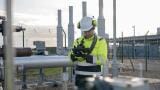
By integrating the concepts of real-time gas monitoring with anomaly detection using machine learning techniques, it will revamp worker safety by providing continuous oversight of hazardous environments and improving safety protocols. In petroleum facilities, IoT-based gas sensors such as MQ-series sensors are installed at the critical points within pipelines as seen in an example in Figure 1.
The MQ-2 is used to sense for flammable gases, MQ-3 for alcohol vapors, and MQ-135 for air quality [1].
These sensors are connected to microcontrollers such as a normal Arduino board or Raspberry Pi.
These sensors are used to collect gas concentration data and transmit wirelessly to a central processing system.
Algorithms such as One-Class SVM, Isolation Forest, etc. can be used for analyzing patterns and observing anomalies.
Anomaly detection, such as a sudden spike in toxic chemicals (benzene, hydrogen sulfide etc.) acts as a warning system, directing operators and engineers to preemptively take action before an accident can occur.
Ultimately, this reduces reliance on repetitive manual inspections and human monitoring in hazardous areas.
Another emerging asset in the realm of IoT is in the field of predictive maintenance.
This tool, which leverages the integration of smart sensors and analytics in the petroleum industry, does not only provide hard cost savings, but also enhances equipment reliability and efficiency.
Traditional equipment surveys and periodic inspections are volatile and often tend to overlook faults within the intricacies of an industrial process.
In contrast, predictive maintenance addresses these limitations by monitoring equipment health and performance in real-time, taking advantage of integrated IoT sensing and machine learning, and anticipating equipment health and early detection of faults and failures [2].
The internals of the process begin with the constant procurement of high-resolution data from the assets in the industrial process, which, in turn, represents the dynamic nature of the processes and provides the primary source for understanding the normal and abnormal states of the system.
Once collected, the sensor data is subjected to systematic preprocessing and statistical analysis to establish baseline operational behavior.
Statistical measures such as mean values, extrema, and variability, are examined to capture normal behavior of equipment under stable operating conditions.
A statistical basis allows for identification of relevant deviations and supports the generation of realistic fault scenarios.
To ensure that the learning process represents actual industrial environments, faults are intentionally implemented into the dataset using controlled fault injection techniques.
These techniques simulate common sensor and equipment faults (spike, stuck, and bias faults) by modifying sensor readings based on parameters and transitions using a Markov chain.
This process maintains the natural behavior of industrial systems while capturing the random nature of fault occurrences [2].
The fault-enhanced dataset was used to train models that can tell the difference between normal and faulty equipment conditions.
The supervised learning algorithms learn the patterns of the data to identify the intricate differences between the normal sensor readings and the defective ones.
The algorithms improve their ability to differentiate between the two as they learn, without getting too biased towards the training data.
Once the algorithms are trained, the predictive maintenance system can use the sensor readings to identify any signs of failure by comparing the readings with the learned patterns.
To identify the patterns of the defective sensor readings, we use the Extreme Gradient Boosting algorithm, which is best suited for this type of data.
Figure 2: Fault Detection Score Comparison [2].
The F1 score comparison in Figure 2 was obtained after training the XGBoost classifier, as well as other baseline models such as Logistic Regression (LR), Support Vector Machine (SVM), Decision Tree (DT), Random Forest (RF), on the fault-injected dataset.
The models were trained on their ability to detect spike faults in different types of sensor data, with the F1 score used as a metric to measure their accuracy in fault detection [2].
The oil & gas (O&G) industry is also exploring Digital Twin (DT) technology, which has been created as a tool that allows industrial companies to create virtual replicas of physical equipment and machines, allowing continuous monitoring, simulation, and strategic planning [3].
Although the adoption of Digital Twins in the O&G industry is still in its early stages, the technology has significant potential to revolutionize how operators can monitor and predict equipment behavior.
Digital Twins (DT) function by creating a virtual replication of a physical asset or system, enabling operators to monitor, simulate, and optimize operations in real time [4].
At the core of DT is the integration of three key components: the physical space, the virtual space, and the connection between them, as seen in Figure 3 [3].
The physical space contains the actual asset along with sensors and actuators that continuously collect operational and environmental data.
This data is transmitted to the virtual space, where multi-scale, multi-physics simulation models aggregate, analyze, and simulate the performance of the physical system.
The connection between these spaces allows for seamless communication, enabling the virtual model to send optimized commands back to the physical asset, thus creating a closed feedback loop for continuous monitoring, analysis, and control [3].
More advanced DT frameworks extend this three-component model to include data fusion and service systems, further enhancing the predictive and prescriptive capabilities of the twin, as seen in Figure 4.
The data fusion module integrates information from sensors, simulations, and enterprise software tools to generate actionable insights, while service systems provide support for visualization, diagnostics, algorithm execution, and model calibration [5].
This setup allows operators to run “what-if” scenarios, train personnel in realistic virtual environments, and optimize plant performance without interfering with live operations.
By leveraging enabling technologies such as IoT sensors, data analytics, edge processing, and secure communication interfaces, DTs can provide a comprehensive, real-time digital representation of physical assets, enabling proactive maintenance, improved safety, and more efficient operations in the O&G industry [6].
In the oil and gas industry, the applications of Digital Twins are plentiful.
They can be applied to a wide range of assets, from individual equipment like pumps, compressors, and valves, to integrated systems such as processing units, pipelines, and well clusters, and up to entire plants or facilities like refineries, and LNG terminals, allowing for monitoring, simulation, predictive maintenance, and operator training across physical and process-based components [5].
The integration of IoT technologies into petroleum chemical processes is fundamentally shifting how instrumentation is used to monitor and control industrial operations.
Traditional petroleum instrumentation has relied on periodic, manual inspections, which can limit detection of early-stage faults.
IoT instrumentation changes this, turning sensors from passive devices into active computers that constantly feed information.
As the petroleum industry continues to drive safety, efficiency, and reliability, IoT instrumentation will be critical in the evolution of modern control operations.
Though challenges exist in cybersecurity and deployment, the development of sensor technologies and analytics allows IoT as a key enabler of smarter and safer petroleum operations.
Dr. Raj Shah is a Director at Koehler Instrument Company in Holtsville, New York, where he has served for over three decades, contributing to the advancement of petroleum, fuels, lubricants, and analytical instrumentation technologies worldwide.
Over the course of his distinguished career in the energy and chemical engineering industries, he has become widely recognized for both his technical leadership and sustained service to global professional societies.
Dr. Shah is an elected Fellow by his peers at ASTM International, the Institute of Chemical Engineers (IChemE), the Chartered Management Institute (CMI), the Society of Tribologists and Lubrication Engineers (STLE), the American Institute of Chemists (AIC), the National Lubricating Grease Institute (NLGI), the Institute of Measurement and Control (InstMC), the American Oil Chemists’ Society (AOCS), the Institute of Physics (IOP), The Energy Institute (EI), and The Royal Society of Chemistry (RSC).
These fellowships reflect his multidisciplinary impact across chemical engineering, tribology, measurement science, energy technology, and applied chemistry.
He is also the recipient of the prestigious ASTM Eagle Award and ASTM’s highest honor, the Award of Merit (Fellow), recognizing more than 30 years of leadership and contribution to Committee D02 on Petroleum Products, Liquid Fuels, and Lubricants.
He recently co-edited the bestseller, Fuels and Lubricants Handbook: Technology, Performance, Properties, and Testing, a major reference work for the industry.
Dr. Shah has now authored and co-authored over 750 technical publications, conference papers, and industry articles, and continues to be an active contributor to the scientific and engineering literature. Further information regarding his work and recognitions can be found at https://shorturl.at/I7000.
Dr. Shah earned his doctorate in Chemical Engineering from The Pennsylvania State University and is a Fellow of The Chartered Management Institute, London.
He is a Chartered Scientist (CSci) with the Science Council, a Chartered Chemist (CChem) with the Royal Society of Chemistry, a Chartered Engineer (CEng) with the Engineering Council, UK, and a Chartered Petroleum Engineer (CPEng) with the Energy Institute.
He was recently granted the honorific distinction of “Eminent Engineer” by Tau Beta Pi, the oldest and largest engineering honor society in the United States, an honor reserved for engineers demonstrating exceptional professional achievement and character.
Actively engaged in academia and mentorship, Dr. Shah serves on the Advisory Boards of Farmingdale State College (Mechanical Technology and Engineering Management), Auburn University (Tribology and Lubrication Science), and the State University of New York at Stony Brook (Chemical Engineering and Materials Science & Engineering).
He is also an Adjunct Professor in the Department of Materials Science and Chemical Engineering at Stony Brook University.
Throughout his career, he has remained deeply committed to advancing engineering education, standards development, and technical excellence within the global energy community.
More information on Dr. Shah can be found at https://shorturl.at/yYl85.
Nader Doura is part of a thriving internship program at Koehler Instrument Company in Holtsville, NY working closely with Dr. Raj Shah.
Mr. Gavin Thomas is part of a thriving internship program at Koehler Instrument Company in Holtsville, NY and is a recent graduate of the Chemical and Molecular Engineering program at Stony Brook University.
He also works as a process engineer at Mill-Max in Oyster Bay, NY where he becomes hands-on with various production processes to ultimately improve safety, efficiency, and cost-effectiveness.
[1] Sonali Antad, Virat Giri, Bhushan Bachewar, Shreya Barsude, Aayush Gadiya1 and Harsh
Badagandi1, “Real-Time Gas Monitoring and Anomaly Detection in Petroleum Industry Using IoT and Machine Learning” International Journal of Computing & Digital Systems, vol. 17, no. 1, pp. 1-17, 2025. [Online]. Available: https://journal.uob.edu.bh/items/da1eec03-0099-421a-bab1-28e5d1281861
[2] Reem Atassi, Fuad Alhosban, “Predictive Maintenance in IoT: Early Fault Detection and Failure Prediction in Industrial Equipment”, Journal of Intelligent Systems and Internet of Things, vol. 09, no. 02, pp. 231-238, 023 [Online]. Available: https://doi.org/10.54216/JISIoT.090217
[3] Tao, F., Qi, Q., Liu, A., & Kusiak, A. (2020).Digital Twin for the Oil and Gas Industry: Overview, Research Trends, Opportunities, and Challenges. IEEE Access, 8, 123456–123468. Available:
https://doi.org/10.1109/ACCESS.2020.9104682
[4] Mitacc Meza, E. B., Borges de Souza, D. G., & Copetti, A. (Year). Tools, technologies and frameworks for digital twins in the oil and gas industry: An in-depth analysis. Sensors. Vol. 24. no.19. Available:https://www.mdpi.com/1424-8220/24/19/6457
[5] Rossi, K. (2024, March 7). Predictive maintenance in the oil and gas industry. LLumin. https://llumin.com/blog/predictive-maintenance-oil-and-gas/
[6] Next Industries. (2025, May 28). How IoT is revolutionizing the oil & gas industry. NextInd. https://www.nextind.eu/blog/how-iot-is-revolutionizing-the-oil-gas-industry/
PIN 27.4 Aug/Sept 2026

 Product directory


.jpg)