Analytical instrumentation
With environmental concerns driving a reduction in PFAS use across the world, Dr Raj Shah, Petrit Sheshori and Gavin Thomas explore the alternatives
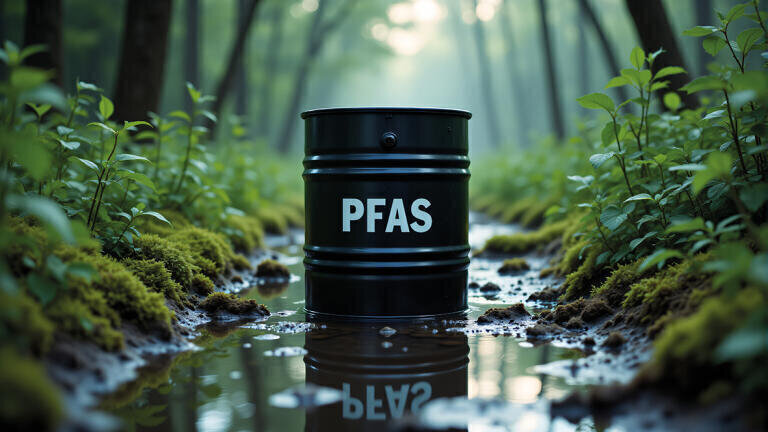
Per and polyfluoroalkyl substances (PFAS) have been heavily used in lubricant formations. This is due to their great thermal stability, chemical inertness and low surface energy.
These characteristics allow for effective friction reduction, improved resistance of wear and for extended life under many extreme conditions.
The fluorinated additives also have become common in industrial, automotive and specialty lubricant applications.
Despite all the benefits PFAS add, PFAS are more commonly associated with environmental persistence, bioaccumulation and potential harmful effects.
The reason for this is because their strong carbon fluorine bonds do not allow natural degradation to go smoothly. This leads to contamination in the environment.
Growing concerns on how PFAS impact the environment has led to strict regulatory controls on PFAS and phase out initiatives.
Due to all the environmental problems, there has been research focused on fluorine-free alternatives like organosilicon additives, nanoparticle-based systems and bio-derived esters.
These solutions have shown promising results. However, there still is a lot of uncertainty about how they will perform in the real world.
This article will examine the impact of PFAS restrictions on lubricant performance by evaluating the role of PFAS, the regulatory policies, emerging alternatives and green substitutes, and the challenges involved with PFAS.
Regulatory controls on PFAS have become increasingly common with how they affect the environment.
The regulatory approaches to PFAS have shifted from substance-by-substance control to meaning all PFAS as a single chemical case [1].
This shift is driven because of the large number of PFAS compounds currently used.
There are thousands of identified substances, meaning chemical by chemical control is impractical [1].
This perspective has influenced policy development in the US and Europe as the regulators are moving towards broader restrictions compared to targeting specific compounds like PFOS and PFOA.
In Europe, PFAS regulation has expanded under the REACH framework [2].
The REACH framework proposals aim to restrict non-essential uses across all industrial sectors. These include lubricants, with the only exception being if there is no alternative at all [2].
The regulatory approach only allows the exemptions of PFAS for when they are considered necessary for health, safety or societal functions. And when no suitable alternatives are available [3].
By using this framework, it puts pressure on manufacturers to justify their continued use of PFAS or use an alternative solution.
Similar trends are occurring in the US as regulatory agencies are emphasising stricter control of PFAS by expanding reporting requirements and use limitations, instead of cleaning up the pollution after its use [4].
All these revolving policies create challenges for lubricant application. PFAS’ use for friction reduction and wear protection no longer qualify as essential use.
As a result, all the regulatory trends are accelerating the need for PFAS-free lubricant production.
PFAS have been widely used in lubricant formulations because of their unique physiochemical and tribological properties.
PFAS have fluorinated compounds that exhibit low surface energy, high thermal stability and strong resistance to oxidation and chemical degradation [5].
This makes them effective friction modifiers and anti-wear additives [5].
Specifically, fluoropolymers like polytetrafluoroethylene (PTFE) and fluorinated surfactants form stable boundary films on metal surfaces.
This reduces direct asperity contact and minimises adhesive wear under high temperature and high load conditions [6].
Experimental and industrial studies report that PTFE-contained lubricants reduce the coefficient of friction values in the 0.04-0.10 range compared to the normal 0.12-0.20 range [6].
PFAS additives are also valued because of their durability and long service life.
This is because of their strong carbon fluorine bonds that allow lubricants to maintain performance over extended periods of time. This is even true in high operating temperatures of 250-350℃ where normal hydrocarbon additives tend to degrade [7].
PFAS-containing lubricants also reduce the wear rates by 30-60% compared to non-flourinated systems. This improves the energy efficiency and how long it lasts [2].
PFAS are also used in specialty lubricants for aerospace, vacuum and precision mechanical systems because of their low volatility and thermal resilience [6].
This functional versatility explains why PFAS have become so important in today’s world. It shows why the phase out of PFAS presents significant challenges for manufacturers.
As the regulatory pressure is increasing to eliminate PFAS from lubricant formulations, research has started to shift towards fluorine-free additives that can reproduce key PFAS functions like friction reduction, wear protection and thermal stability.
One of the most explored alternatives to PFAS is organosilicon-based additives. These include siloxanes and silicone-modified esters [8].
These materials have low surface energy and strong resistance to thermal and oxidative degradation. This is what allows for lubrication without the fluoride.
A 2024 study led by Romain Figuiere showed that siloxane-containing lubricants have a coefficient of friction in the 0.06-0.12 range compared to the 0.12-0.20 range of unmodified systems [8].
This shows there is a reduction of friction even without the PFAS inclusion.
The study also shows organo-silicon additives are thermally stable to temperatures of up to 250℃. This allows the application to work in moderately high temperature just like they would with PFAS [8].
Another solution gaining popularity is nanoparticle enhanced lubricants.
This alternative is specifically useful for replacing PFAS additives like PTFE.
A June 2025 study led by Yuri Park showed that metal oxide and carbon-based nanoparticles function by rolling, and tribofilm forming mechanisms [9].
This can reduce the coefficient of friction to 0.08, and the wear rates by 20-60% compared to lubricants without nanoparticles.
Bio-derived ester lubricants are also becoming increasingly studied as a PFAS alternative. This is because of their strong lubricity and favourable tribological performances.
The esters, which come from renewable feedstock, have polar functional groups that absorb onto metal structures. They therefore promote stable lubrication films [10].
The surface affinity reduces direct asperity contact and enhances the friction and wear performances. This removes the need for fluorine additives, which harm the environment [10].
The bio esters achieve a 25% reduction in the coefficient of friction compared to conventional mineral oils [10].
They also achieved a 20-30% reduction in wear scar diameter, which indicates good surface protection and high capability [10].
The comparison for friction coefficients, wear reduction and thermal stability for PFAS-based lubricants and emerging PFAS-free alternatives is summarised in Table 1. It shows that PFAS is the most efficient. But the alternatives are not that far behind.
All of these new alternatives achieved by new technology is a major reason why all the major restrictions on PFAS won’t be a major problem in the near future.
Despite all the progress in developing PFAS-free lubrication systems, there are several technical and industrial challenges that limit large-scale implementation.
The biggest problem is multifunctionality. This refers to PFAS’ ability to perform several key functions like friction reduction, wear protection and thermal stability at the same time, with other chemical benefits [8].
Because of this challenge, fluorine-free additives are required at higher concentrations; usually (2-5 wt%) to have a similar performance as PFAS additives [8].
The problem with having a higher concentration is that the higher amount of additives can negatively affect the lubricants viscosity, stability and compatibility with seals and other additives [8].
Another challenge is the lack of long-term performance data.
So far, most of the PFAS alternatives show good performance with friction and wear results. But they have only been tested for hundreds of operating hours compared to PFAS lubricants with over thousands of operating hours [11].
Another problem with the alternatives is that they are several times more expensive than PFAS. They are also not produced in industrial settings [11].
In addition, alternative lubricants do not always have a good blend with existing base oils. This therefore increases the testing costs and decreases performance and reliability [11].
Together, all of these issues show that even though PFAS alternatives are promising, limitations and challenges stop them from becoming more used than PFAS.
PFAS have historically played a huge role in lubricants because of their strong friction reduction, wear protection and thermal stability properties.
However, there are environmental and health concerns that have led to PFAS getting strict regulations and phase-out efforts that are reshaping lubricant formulation processes.
In response to all the new regulations, fluorine-free alternatives like organosilicon additives, nanoparticle-based systems and bio-derived esters have become increasingly popular and studied.
Despite all the progress the challenges of using alternatives have stopped the PFAS alternatives from getting implemented all over the world.
Overall PFAS restrictions are driving innovations in lubricant technology and making the world a healthier and cleaner environment.
Dr Raj Shah is director at Koehler Instrument Company in New York, where he has worked for over 25 years.
He is an elected Fellow or Chartered professional with numerous organisations, including ASTM, IChemE, STLE, NLGI, the Energy Institute, the Royal Society of Chemistry, and the Chartered Management Institute, among others, and is an ASTM Eagle Award recipient.
He coedited the bestseller Fuels and Lubricants Handbook and holds a PhD in Chemical Engineering from Penn State.
Dr Shah is an adjunct professor in materials science and chemical engineering at Stony Brook University, serves on multiple academic advisory boards, and has authored over 725 publications during more than three decades in the energy industry.
Petrit Sheshori is an undergraduate student of engineering at Stony Brook University.
He is also a member of a thriving petroleum research internship at Koehler Instrument Company where he regularly contributes to the petroleum and energy research industry.
Gavin Thomas is part of a thriving internship program at Koehler Instrument Company in Holtsville and just graduated with a degree in chemical and molecular engineering from Stony Brook University, Stony Brook, New York.
He also works as a process engineer at Mill-Max in Oyster Bay, NY where he becomes hands-on with various production processes to ultimately improve safety, efficiency and cost-effectiveness.
1. Kwiatkowski, Carol F, et al. “Scientific Basis for Managing PFAS as a Chemical Class.” ACS, 30 June 2020, pubs.acs.org/doi/10.1021/acs.estlett.0c00765.
2. “Per- and Polyfluoroalkyl Substances (PFAS) .” ECHA, 13 Jan. 2023, echa.europa.eu/hot-topics/perfluoroalkyl-chemicals-pfas.
3. Cousins, Ian T, et al. “The Concept of Essential Use for Determining When Uses of PFASs Can Be Phased Out.” ETH, 11 Sept. 2019, www.research-collection.ethz.ch/server/api/core/bitstreams/e1a09729-9029-4115-9c15-df93ddb1513e/content.
4. Langenbach, Blake, and Mark Wilson. “Per- and Polyfluoroalkyl Substances (PFAS): Significance and Considerations Within the Regulatory Framework of the USA.” Centers for Disease Control and Prevention, Centers for Disease Control and Prevention, 1 Nov. 2021, stacks.cdc.gov/view/cdc/222550.
5. Glüge, Juliane, et al. “An Overview of the Uses of Per- and Polyfluoroalkyl Substances (PFAS).” Environmental Science. Processes & Impacts, U.S. National Library of Medicine, 1 Dec. 2020, pubmed.ncbi.nlm.nih.gov/33125022/.
6. Dias, Darrius. “Forever Chemicals, Per-and Polyfluoroalkyl Substances (PFAS) , in Lubrication.” MDPI, 29 Mar. 2024, www.researchgate.net/publication/379403908_Forever_Chemicals_Per-and_Polyfluoroalkyl_Substances_PFAS_in_Lubrication
7. Ameduri, Bruno. “What Do We Know About Per- or Polyfluoroalkyl Substances (PFASs)? Issues, Challenges, Regulations, and Possible AlternativesA.” ACSPublications, 6 Mar. 2025, pubs.acs.org/doi/10.1021/acs.macromol.4c02993
8. Figuière, Romain, et al. “An Overview of Potential Alternatives for the Multiple Uses of Per- and Polyfluoroalkyl Substances.” Environmental Science & Technology, U.S. National Library of Medicine, 24 Jan. 2025, pubmed.ncbi.nlm.nih.gov/39851256/.
9. Park, Yuri, et al. “Environmental Limitations of PTFE for Ultralow Friction Composites and Alternatives to Using Liquid Lubricants.” SciOpen, 14 Apr. 2025, www.sciopen.com/article/10.26599/FRICT.2025.9441022.
10. Zulhanafi, P, et al. “Tribological Performance of Trimethylolpropane Ester Bio-Lubricant Enhanced by Graphene Oxide Nanoparticles and Oleic Acid as a Surfactant.”
Https://Www.Sciencedirect.Com/Science/Article/Abs/Pii/S0301679X23001858, 2023, www.researchgate.net/publication/351163114_httpswwwsciencedirectcomsciencearticleabspiiS1051200421000968
11. Itumoh, Emeka J., et al. “Addressing the Persistence of Per- and Poly-Fluoroalkyl Substances (PFAS): Current Challenges and Potential Solutions.” RSC Sustainability, RSC, 14 Aug. 2024, pubs.rsc.org/en/content/articlelanding/2024/su/d4su00152d.
PIN 27.4 Aug/Sept 2026

 Product directory


.jpg)