Analytical instrumentation
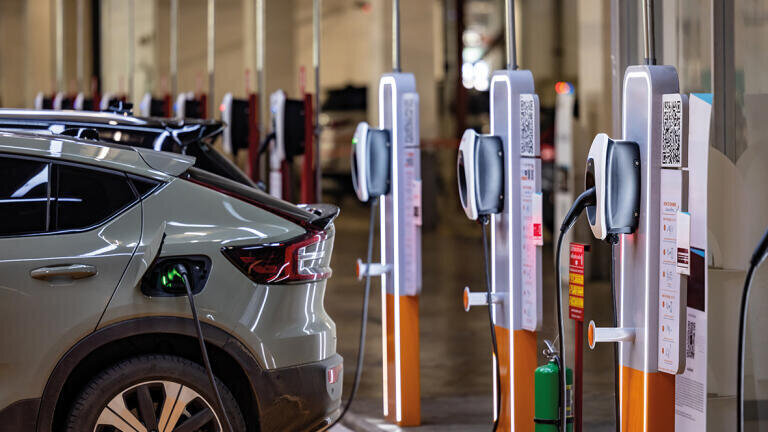
The adoption of electric vehicles (EVs) has imposed new requirements on lubricating greases, particularly for sealed-for-life motor bearings expected to operate for 15 years or 300,000 km without relubrication.
Fleet data attributes up to 50% of EV motor bearing failures to lubrication issues aggravated by stray currents, electrical discharge machining, and micro-arcing; failure modes largely absent in internal combustion engine (ICE) applications.
This paper reviews four areas of grease reformulation driven by these challenges: the tradeoff between electrically insulating and dissipative formulation strategies, with dissipative greases targeting a resistivity window of 10⁶ to 10⁹ Ω·cm; the mechanisms by which micro-arcing degrades grease at current densities as low as 0.1 A/mm²; the advantages of polyurea thickeners over lithium complex systems, including oxidation induction times of 21+ minutes versus 11–13 minutes; and material compatibility constraints involving copper windings, polymer insulators, and rare-earth magnets.
Based on peer-reviewed literature published from 2021 to 2026, this paper examines the growth of electro-tribology and identifies the quantitative performance benchmarks defining next-generation EV motor bearing greases.
The adoption of electric drivetrains has introduced an environment fundamentally different from standard lubricating greases.
In a conventional ICE vehicle, greases would have solely been exposed to mechanical loads and thermal stress, while electrical considerations were negligible [1].
In an electric drive unit (EDU), however, the motor is a powerful source of electromagnetic interference.
The inverter, which is increasingly constructed based on wide-bandgap semiconductors like silicon carbide (SiC) and gallium nitride (GaN), generates high-frequency pulse-width-modulated signals that generate common mode voltages in the motor shaft [2].
These parasitic voltages seek a path to ground, and the rolling element bearings, separated from the housing only by a thin layer of grease, often offer that path.
The resulting consequences are severe.
The grease film acts as a dielectric layer in a small capacitor formed by the inner and outer bearing races.
When the shaft voltage is above the dielectric breakdown voltage (DBV) of the film, there is a micro-arc discharge through the film that causes localized temperatures of over 1000 ℃ [3].
Fleet data indicates that as many as 50% of EV motor bearing failures can be attributed to lubrication issues aggravated by electrical currents [4].
Compounding the problem, the industry expects motor bearings to be sealed for life without relubrication, typically 15 years or 300,000 km of drive distance [1].
The grease must withstand extreme mechanical and electrical stress along with long-term chemical degradation, not to be replaced.
There are two general philosophies of protecting bearings from electrical damage.
The first, the insulating strategy, attempts to design a grease with a dielectric strength high enough to prevent the flow of current altogether.
Hydrocarbon base oils such as polyalphaolefins (PAO) and mineral oils are naturally excellent insulators, having volume resistivities on the order of greater than 10¹² Ω·cm [2].
In theory, if the grease prevents any charge transfer, the bearing surfaces remain unharmed.
In practice, however, the high switching frequencies of modern SiC inverters couple capacitively across the bearing, storing energy in the dielectric grease film.
Film thickness is not constant, fluctuating with speed and vibration.
When the film randomly becomes thinner, the breakdown threshold drops and the stored energy is released in a violent nanosecond-scale discharge [2].
Thus, the insulating strategy has an inherent vulnerability: the grease’s high resistivity allows it to function as a capacitor dielectric, accumulating stored energy that is released as destructive arcing when the film thickness fluctuates.
The second philosophy, the dissipative or low impedance strategy, has become the predominant strategy in 2026. Instead of preventing current flow at all, a dissipative grease is designed to permit a small, continuous leakage current to drain the shaft voltage passively into ground.
The resistivity window is typically 10⁶ to 10⁹ Ω·cm [2]. In this range, the bearing acts as a high-value resistor rather than a capacitor which prevents the voltage build-up that triggers high energy arcs.
Achieving the desired conductivity without the degradation of tribological performance is the current chemical challenge.
Granted, ionic liquids (ILs) have come to be a particularly effective solution.
Unlike solid conductive fillers such as graphite or carbon black which can act as abrasives, ILs are salts that remain liquid and integrate into the base oil matrix, providing ionic charge transference pathways independent of particle-to-particle percolation [5].
Phosphonium-based ILs indicate high thermal stability and strong compatibility with non-polar base oils, making them the leading additive for dissipative greases [6].
However, ILs cost heavily, limiting its widespread usage.
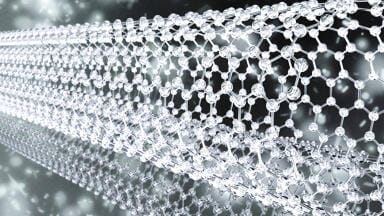
Carbon nanomaterials provide an alternative.
The introduction of 0.4 wt% multi-walled carbon nanotubes (MWCNT) into lithium grease has been shown to reduce electrical discharge damage by more than 70% while also reinforcing the grease structure.
However, MWCNT is less effective as a lubricant when measuring the Average Coefficient of Friction, where it has shown COF’s of 0.1 and below as the wt% increases [7].
The microstructure of MWCNTs within the grease matrix is shown in Fig. 1a.
The SEM image (20,000x magnification) reveals the tubular nanostructures interwoven throughout the thickener network, illustrating how the nanotubes form the percolating conductive pathways that enable charge dissipation across the grease film.
As shown in Fig. 1b, MWCNT-doped greases consistently outperform both the baseline lithium grease and alumina-doped formulations in friction reduction.
The baseline lithium grease exhibits a COF of approximately 0.17, whereas MWCNT additions progressively lower the COF to approximately 0.04 at 0.4 wt.%, a reduction of roughly 76%.
Alumina-doped greases also reduce friction relative to the baseline but plateau near 0.08 at 0.4 wt.%, approximately double the MWCNT value at the same concentration.
This confirms the dual functionality of MWCNTs: they not only provide electrical conductivity but also act as friction-reducing nano-bearings, an advantage that alumina particles do not offer.
Electrically induced bearing damage is now known as the dominating life-limiting phenomenon for EV motor bearings different from the mechanical spalling that hindered the longevity of industrial bearings over the past decades [3].
When stray currents flow through a bearing, the damage beyond just the steel raceways. The grease itself is subject to rapid chemical degradation.
During a micro-arc event, the plasma channel reaches temperatures of more than 1,000 ℃ for microsecond durations, breaking the hydrocarbon chains in the base oil and generating free radicals that initiate autocatalytic oxidation.
As a result, the total acid number significantly increases [3], [8].
This in turn causes the development of varnish and sludge that further degrades the lifespan of greases [4].
The thickener structure is also susceptible to damage.
During high energy discharges, the fibrous network of soap-based thickeners is broken, and the grease softens irreversibly and bleeds (releases base oil) from the contact zone.
A diagnostic characteristic of this degradation is the premature blackening of the grease called black grease syndrome, caused by the carbonization of the base oil and formation of fine iron microspheres from the molten raceway metal [3].
L. J. Sanchez et al. [3] have determined that surface damage starts at densities as low as 0.1 A/mm², well below the 0.4 A/mm² threshold established by earlier industrial electric motor standards.
As seen in Fig. 2, roller surfaces exposed to 1 A/mm² in mineral oil exhibit white etching cracks (a, b), a distinct white layer (c), and micro-spalling on the surface (d) which indicates that electrical exposure produces damage morphologies distinct from purely mechanical fatigue.
Greases with 0.4% MWCNT added to them were able to reduce vibration amplitudes by about 65% and surface roughness by about 71% compared to non-conductive baselines [7].
Accelerated life testing has further shown that continuous arcing can reduce the useful oxidative life of a grease by half of that produced by purely mechanical aging [9].
These findings highlight the importance of the dissipative strategy, which avoids destructive arcing instead of simply tolerating it, which has become widely accepted.
As seen in Table 1, increasing MWCNT concentration from 0.1 to 0.4 wt.% consistently reduces both friction coefficient and wear rate across all tested load conditions, while simultaneously increasing surface hardness and interfacial shear strength [20].
Table 1: MWCNT Effects by wt. % [20].
Still, the DBV of a grease constantly fluctuates.
Fresh grease may exhibit a high breakdown voltage, but as the lubricant shears and accumulates conductive iron wear debris, the DBV falls.
Debris particles act as microscopic lightning rods that concentrate the electric field and promote erratic arcing at lower voltages.
Even trace amounts of moisture can dramatically reduce DBV, highlighting the importance of water-resistant thickener systems.
Water contamination, even at parts-per-million levels, introduces ionic conduction pathways through the grease film that bypass its dielectric properties, sharply lowering the voltage threshold at which breakdown occurs [2].
For decades, lithium complex greases dominated the automotive grease market with more than 60% of market share [10].
The transition to EVs is changing that dominance.
Polyurea (PU) thickeners, ashless, organic gel networks bound by hydrogen bonding of urea groups, provide a range of properties that are better matched to the EV operating scheme.
Thermal stability is one of PU’s main advantages.
EV motors regularly operate at 20,000 rev/min or more, generating rapid temperature excursions in the bearing.
Polyurea greases usually have dropping points above 260 °C and can reach up to 300 °C, giving a significant safety margin above lithium complex formulations that soften and oxidize at similar temperatures [11].
Polyurea greases have shown an oxidation induction time value of 21 minutes or higher under standardized conditions, compared with 11-13 minutes for the lithium complex counterpart [12], [13].
This disparity is partly attributed to the catalytic role of lithium ions: in the presence of oxidized base oil and electrical fields, lithium metal soaps promote hydroperoxide decomposition, accelerating the oxidation chain reaction that the grease must resist [4].
Polyurea, being organic and ashless, eliminates this catalytic pathway entirely [4].
As seen in Fig. 3, this advantage is evident across the full operating temperature range [13].
The lithium-based formulations in the top row show L₁₀ grease life declining sharply with temperature, falling toward 10¹ hours by 150 °C.
In contrast, the diurea and polyurea formulations in the bottom row maintain L₁₀ values near
10³ hours even at test temperatures of 160–170 °C demonstrating significantly greater thermal endurance for sealed-for-life applications.
Catalytic inertness is another factor which differentiates the two thickeners.
Since lithium is a metal, in the presence of oxidized oil and electrical fields, ions can catalyze the decomposition of hydroperoxides and therefore accelerate the very oxidation that the grease must resist [4].
Polyurea contains no metal component, so this catalytic pathway simply does not occur, yielding longer oxidative stability, especially in electrically stressed environments.
Rheological considerations also suggest polyurea as superior.
Under the extreme shear rate of high-speed motors typical in EVs, lithium complex greases tend to structurally breakdown and soften with time, whereas polyurea networks maintain their National Lubricating Grease Institute grade more reliably [4].
Another aspect is dielectrophoresis, the alignment of polar thickener fibers in an applied electric field, which can alter film thickness in the contact zone [6].
This effect is less pronounced in non-polar polyurea structures compared to metallic greases, ensuring more predictable film formation.
Despite its advantages, polyurea has historically been difficult to manufacture.
It involves the reaction of isocyanates and amines, materials that are hazardous and require strict process control.
However, the development of preformed polyurea thickener powders has eliminated the volatility of the in-situ isocyanate-amine reaction, therefore making high-performance PU greases more widely available [14].
The internal environment of an EV motor is chemically much more complex than an ICE drivetrain.
Grease in a motor bearing can be very close to copper stator windings, polymer wire insulation, adhesive varnishes and neodymium-iron-boron (NdFeB) permanent magnets. Incompatibility with any of these materials can be disastrous.
Copper corrosion is a major concern.
Traditional sulfur-phosphorus extreme pressure additives that work well for steel-on-steel contacts highly react with copper at higher temperatures.
The reaction forms copper sulfide, a brittle conductive corrosion product which flakes from the winding surface.
These copper sulfide flakes can migrate through the motor and can straddle insulating gaps, resulting in short circuits-a failure mode known informally as “red death” [15].
Standard copper strip corrosion tests (ASTM D130) are now deemed to be inadequate for EV qualification because they are static, thermal-only tests and do not consider the acceleration of corrosion under voltage bias.
New energized copper wire resistance tests that mimic an EV drivetrain are therefore being developed to find better solutions [16].
Formulators are accordingly moving towards ashless chemistries such as dithiocarbamates and dimercaptothiadole based passivators that offer protection for copper surfaces, while still providing anti-wear performance [15].
Compatibility with polymers is also very important.
The magnet wire insulation, usually polyamideimide (PAI), polyimide (PI) or polyetheretherketone (PEEK), is the only protection against turn-to-turn short circuits.
Certain ester base oils and amine-based antioxidants can solvate or plasticize these polymer coatings reducing tensile strength after thermal aging [17].
Standardized testing is now being performed on the helical coil bond strength and dielectric breakdown voltage before and after aging in the lubricant, requiring at least 90% retention of bond strength [18].
Polyimide varnishes are especially sensitive because the high stiffness of the varnishes makes for poor adhesion to the copper and polar base oils can wick into the interface causing delamination.
Formulators therefore prefer non-polar PAO or specifically validated esters.
NdFeB rare-earth magnets for permanent magnet synchronous motors are also susceptible to corrosion.
Although normally coated with nickel, when breached, any breach will expose the magnet to acidic oxidation byproducts from the grease, resulting in loss of magnetic flux and particulate contamination.
This reinforces the necessity of greases which maintain neutral or mildly alkaline pH over their service life [19].
The findings reviewed in this paper can be assembled into a practical formulation roadmap for EV motor bearing greases.
The dissipative electrical strategy is preferred over insulation.
Target bulk resistivity should fall within 10⁶ to 10⁹ Ω·cm, achieved primarily through phosphonium-based ionic liquids for consistent, shear-independent conductivity.
Where cost is a constraint, 0.4 wt.% MWCNTs serve as a complementary additive, with demonstrated discharge damage reductions exceeding 70%.
Polyurea should be selected over lithium complex as the thickener. Its advantages, higher OIT, dropping points above 260 °C, superior shear stability at 20,000+ rpm, and catalytic inertness, compound over the 15-year sealed service life [8].
Additive packages must be copper-safe and ashless.
Sulfur-phosphorus EP additives should be replaced with dithiocarbamates or dimercaptothiadiazole passivators.
For oxidation control, 2% LDH antioxidants extend service life by 20%. Amine-based antioxidants should be screened carefully to avoid degrading PAI or PI wire insulation.
Base oil selection must balance dielectric properties with polymer compatibility.
PAO provides high insulation strength and polymer safety but requires blending with esters or ionic liquid doping to reach the dissipative resistivity target.
Validation testing should include: Electrochemical Impedance Spectroscopy (EIS) to characterize impedance across operating frequencies; electrified tribometer testing under voltage bias; energized copper wire resistance testing in place of static
ASTM D130; and magnet wire aging tests requiring ≥90% bond strength retention.
The shift from ICE to electric drivetrains has made lubricating grease take on a new role from routine commodity to a precise electrochemical component.
The decision between insulating and dissipative strategies determines additive selection and base oil selection, which then determines thickener compatibility and material interactions.
The dissipative approach has become preferred as it addresses the cause of electrically induced bearing damage.
Polyurea thickeners have demonstrated clear advantages over lithium complex systems in oxidation induction time, shear stability, catalytic inertness, and electrical neutrality.
This makes them a strong candidate for sealed for life EV motor bearings.
The transition to ashless, copper safe, and polymer compatible additive chemistries reflects the notion that grease needs to coexist with a diverse material ecosystem within the motor.
As the industry moves towards 800V architectures, the electrical stress on grease will increase.
The development of advanced additives like MXene nanosheets and layered double hydroxide antioxidants indicates that EV greases of the future will be purposefully built electro-tribological materials, designed from the molecular level to meet the demand of reliable, powerful EV drivetrains.
Dr Raj Shah is a Director at Koehler Instrument Company in Holtsville, New York, where he has served for over three decades, contributing to the advancement of petroleum, fuels, lubricants, and analytical instrumentation technologies worldwide.
Over the course of his distinguished career in the energy and chemical engineering industries, he has become widely recognized for both his technical leadership and sustained service to global professional societies.
Dr. Shah is an elected Fellow by his peers at ASTM International, the Institute of Chemical Engineers (IChemE), the Chartered Management Institute (CMI), the Society of Tribologists and Lubrication Engineers (STLE), the American Institute of Chemists (AIC), the National Lubricating Grease Institute (NLGI), the Institute of Measurement and Control (InstMC), the American Oil Chemists’ Society (AOCS), the Institute of Physics (IOP), The Energy Institute (EI), and The Royal Society of Chemistry (RSC).
These fellowships reflect his multidisciplinary impact across chemical engineering, tribology, measurement science, energy technology, and applied chemistry.
He is also the recipient of the prestigious ASTM Eagle Award and ASTM’s highest honor, the Award of Merit (Fellow), recognizing more than 30 years of leadership and contribution to Committee D02 on Petroleum Products, Liquid Fuels, and Lubricants.
He recently co-edited the bestseller, Fuels and Lubricants Handbook: Technology, Performance, Properties, and Testing, a major reference work for the industry.
Dr. Shah has now authored and co-authored over 750 technical publications, conference papers, and industry articles, and continues to be an active contributor to the scientific and engineering literature.
Further information regarding his work and recognitions can be found at https://shorturl.at/I7000.
Dr. Shah earned his doctorate in Chemical Engineering from The Pennsylvania State University and is a Fellow of The Chartered Management Institute, London. He is a Chartered Scientist (CSci) with the Science Council, a Chartered Chemist (CChem) with the Royal Society of Chemistry, a Chartered Engineer (CEng) with the Engineering Council, UK, and a Chartered Petroleum Engineer (CPEng) with the Energy Institute.
He was recently granted the honorific distinction of “Eminent Engineer” by Tau Beta Pi, the oldest and largest engineering honor society in the United States, an honor reserved for engineers demonstrating exceptional professional achievement and character.
Actively engaged in academia and mentorship, Dr. Shah serves on the Advisory Boards of Farmingdale State College (Mechanical Technology and Engineering Management), Auburn University (Tribology and Lubrication Science), and the State University of New York at Stony Brook (Chemical Engineering and Materials Science & Engineering).
He is also an Adjunct Professor in the Department of Materials Science and Chemical Engineering at Stony Brook University.
Throughout his career, he has remained deeply committed to advancing engineering education, standards development, and technical excellence within the global energy community.
More information on Dr. Shah can be found at https://shorturl.at/yYl85.
Mr. Daniel Yon is a Chemical and Biomolecular Engineering undergraduate at Johns Hopkins Whiting School of Engineering focused on optimizing sustainable industrial systems and next-generation energy processes.
On campus, he serves as an Undergraduate Researcher in the Howard Katz Research Group, engineering and characterizing organic electrochemical transistor (OECT) biosensors for precision diagnostics.
He is also an intern at Koehler Instrument Company under Dr. Raj Shah in Holtsville, NY.
Gavin Thomas is part of a thriving internship program at Koehler Instrument Company in Holtsville, NY and is a recent graduate of the Chemical and Molecular Engineering program at Stony Brook University.
He also works as a process engineer at Mill-Max in Oyster Bay, NY where he becomes hands-on with various production processes to ultimately improve safety, efficiency, and cost-effectiveness.
[1] J. M. Andrew, “The future of lubricating greases in the electric vehicle era,” Tribology and Lubrication Technology, vol. 75, no. 5, pp. 38–44, Jan. 2019, Available: https://www.researchgate.net/publication/333560192
[2] Deepika Shekhawat, A. Jain, Nitesh Vashishtha, A. P. Singh, and R. Kumar, “Tribological Performance Comparison of Lubricating Greases for Electric Vehicle Bearings,” Lubricants, vol. 13, no. 3, pp. 108–108, Mar. 2025, doi: https://doi.org/10.3390/lubricants13030108.
[3] L. J. Sanchez, C. H. Hager, and R. D. Evans, “Rolling Element Bearing Damage in the Presence of Applied Electric Current,” Tribology Transactions, vol. 67, no. 3, pp. 602–613, May 2024, doi: https://doi.org/10.1080/10402004.2024.2364724.
[4] M. Grebe and M. Ruland, “Influence of Mechanical, Thermal, Oxidative and Catalytic Processes on Thickener Structure and Thus on the Service Life of Rolling Bearings,” Lubricants, vol. 10, no. 5, pp. 77–77, Apr. 2022, doi: https://doi.org/10.3390/lubricants10050077.
[5] A. B. Reddy, F. U. Shah, J. Leckner, M. W. Rutland, and Sergei Glavatskih, “On Electric Conductivity of Greases,” Research Square, Feb. 03, 2022. https://www.researchgate.net/publication/359134566
[6] X. Wang, Q. Jane Wang, N. Ren, and R. England, “Lubrication subjected to effects of electric and magnetic fields: recent research progress and a generalized MEMT-field Reynolds equation,” Frontiers in mechanical engineering, vol. 9, no. 2023, Jan. 2024, doi: https://doi.org/10.3389/fmech.2023.1334814.
[7] E. R. Jonjo, I. Ali, T. F. Megahed, and Mohamed, “Mitigation of Electrical Discharge Damage in Electric Vehicle Bearings: Comparative Study of Multi-Walled Carbon Nanotubes and Alumina Nanoparticles in Lubricating Grease,” Vehicles, vol. 7, no. 1, pp. 19–19, Feb. 2025, doi: https://doi.org/10.3390/vehicles7010019.
[8] A. Rezasoltani and M. Khonsari, “On Monitoring Physical and Chemical Degradation and Life Estimation Models for Lubricating Greases,” Lubricants, vol. 4, no. 3, p. 34, Sep. 2016, doi: https://doi.org/10.3390/lubricants4030034.
[9] Y. Li, W. Zhou, W. Xue, Y. Huang, Q. Zhang, and J. Han, “The Enhancement of Overall Performance of Lubricating Grease by Adding Layered Double Hydroxides,” Lubricants, vol. 11, no. 6, p. 260, Jun. 2023, doi: https://doi.org/10.3390/lubricants11060260.
[10] E. Larsson, René Westbroek, J. Leckner, S. Jacobson, and Åsa Kassman Rudolphi, “Unraveling the lubrication mechanisms of lithium complex (LiX)- and polypropylene (PP)- thickened greases in fretting – Part I: Fretting experiments and surface analysis,” Wear, vol. 490–491, no. 204192, pp. 204192–204192, Feb. 2022, doi: https://doi.org/10.1016/j.wear.2021.204192.
[11] L. Liu and H. W. Sun, “Impact of polyurea structure on grease properties,” Lubrication Science, vol. 22, no. 9, pp. 405–413, Sep. 2010, doi: https://doi.org/10.1002/ls.140.
[12] C. Schneidhofer, M. Schandl, N. Dörr, and P. M. Lugt, “A model describing the oxidation rate of lubricating greases,” Frontiers in Mechanical Engineering, vol. 11, Jun. 2025, doi: https://doi.org/10.3389/fmech.2025.1591795.
[13] Y. O. Williams, P. M. Lugt, C. Schneidhofer, and A. Vernes, “On measuring the oxidation induction time and Arrhenius temperature for grease lubricated bearings,” Tribology International, vol. 214, p. 111072, Aug. 2025, doi: https://doi.org/10.1016/j.triboint.2025.111072.
[14] Y. Wang, P. Zhang, X. Gao, and Y. Cheng, “Rheological and tribological properties of polyurea greases containing additives of MoDDP and PB,” Tribology international, vol. 180, no. 108291, pp. 108291–108291, Feb. 2023, doi: https://doi.org/10.1016/j.triboint.2023.108291.
[15] Y. Chen, S. Jha, A. Raut, W. Zhang, and H. Liang, “Performance Characteristics of Lubricants in Electric and Hybrid Vehicles: A Review of Current and Future Needs,” Frontiers in Mechanical Engineering, vol. 6, Oct. 2020, doi: https://doi.org/10.3389/fmech.2020.571464.
[16] J. Alvis-Sanchez, L. I. Farfan-Cabrera, and B. Tormos, “Copper Wire Resistance Corrosion Test for Assessing Copper Compatibility of E-Thermal Fluids for Battery Electric Vehicles (BEVs),” Batteries, vol. 10, no. 8, p. 285, Sep. 2024, doi: https://doi.org/10.3390/batteries10080285.
[17] Y. Kwak, Piotr Grzyska, C. Cleveland, and Adachi Tsuneo, “Magnet Wire Compatibility Test for Electric Drivetrain Fluid Development,” SAE International Journal of Advances and Current Practices in Mobility, vol. 06, no. 3, pp. 1468–1478, Sep. 2023, doi: https://doi.org/10.4271/2023-32-0145.
[18] Y. Kwak, “Degradation Testing,” Electric Vehicle Fluid Testing, pp. 98–117, Sep. 2025, doi: https://doi.org/10.1201/9781003496069-4.
[19] F. He, G. Xie, and J. Luo, “Electrical bearing failures in electric vehicles,” Friction, vol. 8, no. 1, pp. 4–28, Jan. 2020, doi: https://doi.org/10.1007/s40544-019-0356-5.
[20] P. Hiremath et al., “Enhancement of Mechanical and Tribological Properties of MWCNT-Reinforced Bio-Based Epoxy Composites Through Optimization and Molecular Dynamics Simulation,” Journal of Composites Science, vol. 9, no. 4, p. 176, Apr. 2025, doi: https://doi.org/10.3390/jcs9040176.
PIN 27.4 Aug/Sept 2026
 Product directory


.jpg)