Analytical instrumentation
The fourth Industrial Revolution (Industry 4.0) has accelerated digital transformation across industrial sectors by integrating smart sensing, IoT networks, cloud platforms, robotics, and digital twin technologies into traditional manufacturing environments.
Notable in this shift are artificial intelligence (AI) and machine learning (ML), which allow raw data to be transformed into actionable intelligence.
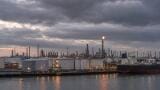
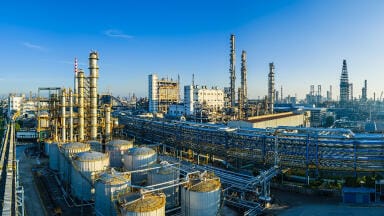
A compelling application of this technology can be seen in oil refineries, as they are highly integrated, nonlinear systems consisting of interdependent unit operations and operating under strict safety and environmental constraints.
While oil refineries are the perfect subject for AI integration into production, the question of how exactly to best incorporate these technologies is still developing.
Research has shown that AI and ML systems offer solutions to oil refineries by enabling predictive equipment maintenance, intelligent optimization, and emissions forecasting that shift refinery operations from reactive and manual to a proactive, continuous, and data-driven process.
Refinery operations are complex systems where small disturbances can often lead to costly failures.
In these systems, reliability and precision are essential to smooth system operation.
Equipment aging, harsh operating conditions, and difficult-to-detect fault nodes often lead to unfortunate but necessary unplanned downtime due to production delays, safety hazards, or increased maintenance spending [1].
Off-specification blending is another major challenge [2].
Fuel properties such as research octane number, vapor pressure, sulfur content, and viscosity depend on nonlinear relationships between multiple feed streams.
Inaccurate mixing could cause quality giveaways, reprocessing costs, or regulatory non-compliance.
Another issue is emission control. CO2, NOx, VOCs, and particulate matter are common emissions from refineries, but predicting and mitigating these emissions is limited by slow reporting rather than predictive monitoring [3].
Traditionally, these problems have been managed with rule-based control, linear programming models, and expert judgment [2].
However, these approaches assume linearity, require manual tuning, and lack the ability to learn.
Because of this, refineries struggle with delayed fault detection, limited real-time visibility, and dependence on human experience [1].
Refineries are therefore exposed to inefficiencies, compliance risk, and production variability.
Because of this, manufacturers have increasingly turned to AI and ML as a solution, leveraging data-driven models to address the limitations of traditional methods.
Given the technologies integrated by Industry 4.0, AI and ML push forward as data-driven solutions that could directly address the limitations currently faced by refinery operations.
The ability to learn complex, nonlinear patterns from process data enables ML models to enhance the accuracy of fault detection and predictive maintenance for rotating equipment, pumps, heat exchangers, and other critical assets [1].
This could significantly reduce unplanned downtime and extend equipment life.
Additionally, AI techniques such as neural networks capture the true nonlinear relationships between feed compositions and product properties, yielding more accurate predictions for various qualities in the final product, such as vapor pressure and culture content, which minimizes off-specification products [4].
For emissions management, time-series models such as long short-term memory (LSTM) networks and ensemble methods allow for real-time forecasting of CO2, NOx, and VOC levels [5].
These models could potentially switch emissions reporting from post-emission summaries to proactive mitigation.
AI-driven optimization and intelligent control integrate sensor data, IoT platforms, and digital twins also support continuous process adjustment rather than static rule-based control, improving throughput, energy efficiency, and safety [6].
AI systems continuously learn from operational data, scale across processes, and operate autonomously, providing refineries with adaptive, predictive, and real-time intelligence that aligns with Industry 4.0 goals.
Predictive maintenance combines ML, IoT sensors, and advanced signal processing in order to anticipate equipment failures before they occur, reducing downtime and maintenance costs.
Generally, critical rotating machinery like pumps, compressors, turbines, and gearboxes operate under high temperatures, pressures, and corrosive environments [1].
These strenuous environments accelerate mechanical wear and introduce failure modes that are difficult to detect through manual inspections.
Currently, traditional maintenance schedules are based on fixed time intervals or run-hours.
Unexpected breakdowns between inspection cycles can cause unplanned production stoppages or safety risks.
By continuously analyzing vibration, thermal, acoustic, and pressure data, AI models can identify patterns associated with bearing pitting, misalignment, lubrication issues, cavitation, or seal degradation long before they escalate [1].
Furthermore, deep learning models, hybrid approaches including physics, and multivariate anomaly detection algorithms further improve sensitivity and accuracy [1].
AI-driven predictive maintenance goes beyond fault prediction. This tool can also work to improve asset management, safety, and energy efficiency [5].
Real-time tracking allows maintenance teams to prioritize interventions, order parts just-in-time, and schedule repairs during planned outages rather than reacting to crises mid-production [7].
This change extends equipment life cycles while reducing operational expenses and minimizing unplanned shutdowns.
Integrating predictive maintenance with digital twins, supervisory control, and data acquisition architectures enables scenario simulation, better load management, and optimization of operating conditions [2].
An industrial manufacturer in the oil and gas sector implemented an AI-driven predictive maintenance system to improve the reliability of rare, high-value production pumps [8].
Using existing IoT data, such as temperature, pressure, and operating hours, the project developed ML models capable of predicting failures despite limited historical labels.
The solution was validated through a parallel human-AI loop, where model predictions were compared against operator inspections and real maintenance outcomes [8].
As a result, the company achieved 90% prediction accuracy, reduced unplanned downtime by 65%, and lowered maintenance costs by 40%, while improving production reliability and establishing a scalable, data-driven foundation for future automation [8].
However, widespread deployment depends heavily on high-quality sensor data and interoperability across legacy systems, which the Industry 4.0 ecosystem is actively working to solve [1].
Once successfully implemented, AI-driven predictive maintenance could signal a step toward intelligent, autonomous asset management aligned with modern refinery performance and sustainability goals.
Optimization in refinery operations primarily focuses on finding efficient and cost-effective methods to run complex processes under constantly changing constraints.
AI and ML enhances this effort by once again using real-time data to allow for dynamic decision making [9].
Specifically for crude selection, optimization models can identify high-value scenarios regarding product blending, hydrogen balancing, furnace control, and energy management [2]).
This functionality is not hindered by nonlinear chemistry or volatile market conditions.
Through simultaneously processing sensor data, historian data, and pricing signals, AI and ML models can recommend setpoint adjustments, sequencing changes, or raw-material configurations to reduce energy consumption and improve product yields without compromising quality or safety [9].
A leading oil and gas operator implemented a monitoring system called the VisionAery AI-based Flare Monitoring Solution [10].
It was meant to improve emissions forecasting, regulatory compliance, and operational safety.
One oil refinery attempted to use AI to optimize its Fluid Catalytic Cracking unit by deploying a reinforcement learning–based real-time optimization system that continuously adjusted operating parameters using live sensor data, historical performance, and market conditions [10].
The system increased the yield of high-value products like gasoline and diesel by 3.5%, reduced energy consumption by 7%, and lowered catalyst usage by 10% through improved regeneration control [10].
Together, these improvements translated into an estimated $45 million in additional annual profit from the FCC unit alone, demonstrating how AI-driven process optimization can directly enhance refinery efficiency, profitability, and energy performance at an industrial scale [10].
Additionally, AI-driven helps refineries operate closer to economic constraints while reducing manual intervention.
Traditional optimization frameworks can falter in the face of disturbances such as equipment fouling, catalyst deactivation, or unexpected unit interactions [4].
ML models can continuously recalibrate as new data arrives.
Emissions forecasting and safety compliance are becoming increasingly critical as refineries face stricter environmental regulations and community safety expectations.
Traditional approaches to emission management include periodic stack testing, lagging indicators, and corrective interventions, which are often reactive and insufficient for modern standards [3].
AI enables proactive emissions forecasting based on real-time process data, historical patterns, and unit performance.
Models can predict when emissions approach regulatory thresholds, identify contributing equipment, and recommend operational adjustments [3].
This allows operators to maintain production efficiency while avoiding environmental violations.
An oil and gas operator attempted to automate emissions monitoring and improve safety and regulatory compliance by implementing the VisionAery Flare Monitoring Solution [11].
The system was combined with edge computing to continuously monitor flares, detect black smoke indicative of incomplete combustion, and automatically adjust blower systems in real time.
The technology allowed for more efficient flare control, reduced harmful emissions, improved worker safety, and allowed for better compliance with emissions-reduction goals, demonstrating how AI can be used to automate emissions forecasting and safety compliance in refinery and oil and gas operations [11].
Along with emissions forecasting, AI supports safety compliance by improving visibility across complex systems and reducing the reliance on manual monitoring.
When the predictive maintenance tools discussed previously are integrated with digital twins, emissions monitoring systems, and automated reporting tools, refineries gain the ability to simulate compliance scenarios, validate control strategies, and streamline documentation for regulators [1].
The result is a work environment where safety and environmental performance are maintained not just as regulatory requirements, but as continuous operational objectives.
Across the three potential uses for AI and ML in complex refinery operations, clear patterns emerge that show how AI and ML will shape future operations.
In all three cases, AI and ML transforms operations from periodic and reactive to continuous and proactive.
Using real-time and historical data allows systems to anticipate problems, recommend adjustments, and tighten control around constraints.
Additionally, the industry sees the movement away from static models and manual workers and towards self-updating systems.
These patterns suggest that AI and ML usage in refineries will revolve around enabling autonomous or semi-autonomous plants that operate closer to economic, safety, and environmental limits with less human intervention.
As these tools mature, the refinery of the future will likely integrate predictive intelligence as a core capability rather than a supplemental enhancement.
The convergence of Industry 4.0 technology and the operational demands of refineries creates a foundation for the adoption of AI and ML.
AI and ML address challenges in predictive maintenance, optimization, and emissions compliance and allow for enhanced reliability, efficiency, safety, and environmental performance.
The clear pattern in these applications shows that AI and ML integration will enable proactive, continuous, and adaptive decision-making across complex refinery systems.
As these capabilities mature, refineries could evolve toward semi-autonomous operations.
Overall, the integration of AI and ML into refinery workflows represents a pathway to transforming industrial process management under the broader goals of Industry 4.0.
Dr. Raj Shah is a Director at Koehler Instrument Company in Holtsville, New York, where he has served for over three decades, contributing to the advancement of petroleum, fuels, lubricants, and analytical instrumentation technologies worldwide.
Over the course of his distinguished career in the energy and chemical engineering industries, he has become widely recognized for both his technical leadership and sustained service to global professional societies.
Dr. Shah is an elected Fellow by his peers at ASTM International, the Institute of Chemical Engineers (IChemE), the Chartered Management Institute (CMI), the Society of Tribologists and Lubrication Engineers (STLE), the American Institute of Chemists (AIC), the National Lubricating Grease Institute (NLGI), the Institute of Measurement and Control (InstMC), the American Oil Chemists’ Society (AOCS), the Institute of Physics (IOP),
The Energy Institute (EI), and The Royal Society of Chemistry (RSC).
These fellowships reflect his multidisciplinary impact across chemical engineering, tribology, measurement science, energy technology, and applied chemistry.
He is also the recipient of the prestigious ASTM Eagle Award and ASTM’s highest honor, the Award of Merit (Fellow), recognizing more than 30 years of leadership and contribution to Committee D02 on Petroleum Products, Liquid Fuels, and Lubricants.
He recently co-edited the bestseller, Fuels and Lubricants Handbook: Technology, Performance, Properties, and Testing, a major reference work for the industry.
Dr. Shah has now authored and co-authored over 750 technical publications, conference papers, and industry articles, and continues to be an active contributor to the scientific and engineering literature.
Further information regarding his work and recognitions can be found at https://shorturl.at/I7000.
Dr. Shah earned his doctorate in Chemical Engineering from The Pennsylvania State University and is a Fellow of The Chartered Management Institute, London.
He is a Chartered Scientist (CSci) with the Science Council, a Chartered Chemist (CChem) with the Royal Society of Chemistry, a Chartered Engineer (CEng) with the Engineering Council, UK, and a Chartered Petroleum Engineer (CPEng) with the Energy Institute.
He was recently granted the honorific distinction of “Eminent Engineer” by Tau Beta Pi, the oldest and largest engineering honor society in the United States, an honor reserved for engineers demonstrating exceptional professional achievement and character.
Actively engaged in academia and mentorship, Dr. Shah serves on the Advisory Boards of Farmingdale State College (Mechanical Technology and Engineering Management), Auburn University (Tribology and Lubrication Science), and the State University of New York at Stony Brook (Chemical Engineering and Materials Science & Engineering).
He is also an Adjunct Professor in the Department of Materials Science and Chemical Engineering at Stony Brook University.
Throughout his career, he has remained deeply committed to advancing engineering education, standards development, and technical excellence within the global energy community.
More information on Dr. Shah can be found at https://shorturl.at/yYl85.
Ms. Malvika Rao is a Chemical Engineering Undergraduate Student at Cornell University.
Her academic interests focus on process engineering, food science, and applied research.
She is also a part of a thriving internship program at Koehler Instrument company in Holtsville, NY underneath Dr. Raj Shah.
1. Rojas, L., Pena, A., & Garcia, J. (2025). AI-Driven Predictive Maintenance in Mining: A Systematic Literature Review on Fault Detection, Digital Twins, and Intelligent Asset Management. Applied Sciences, 15(6). https://doi.org/10.3390/app15063337
2. Jameel, A. (2025, January 3). A Case Study on Integrating an AI System into the Fuel Blending Process in a Chemical Refinery. ChemEngineering, 9(1). https://doi.org/10.3390/chemengineering9010004
3. Gyaase, F., Okunlola, O., Olusanya, A., & Adedokun, A. (2025, May). Utilizing machine learning for predictive analysis of emission levels to ensure compliance in refinery operations. International Journal of Engineering & Technology, 14(1), 24-29. 10.14419/6x85gr51
4. He, C., Zhang, C., Bian, T., Jiao, K., Su, W., Wu, K.-J., & Su, A. (2023). A Review on Artificial Intelligence Enabled Design, Synthesis, and Process Optimization of Chemical Products for Industry 4.0. Processes, 11(2), 330. https://doi.org/10.3390/pr11020330
5. Wang, Z., Xie, Y., Liu, X., Hu, S., Zhang, L., & Zhang, C. (2024, December 9). Applications and Progress of Machine Learning Techniques in the Ladle Furnace Refining Process: A Review. Steel Research International. https://doi.org/10.1002/srin.202400551
6. Hsieh, Y.-H., & Yuan, S.-M. (2025). Artificial Intelligence and Deep Learning in Sensors and Applications: 2nd Edition. Sensors, 25(4), 1144. https://doi.org/10.3390/s25041144
7. Letourneau-Guillon, L., Camirand, D., Guilbert, F., & Forghani, R. (2020, November). Artificial Intelligence Applications for Workflow, Process Optimization and Predictive Analytics. Neuroimaging Clinics of North America, 30(4), e1-e15. https://doi.org/10.1016/j.nic.2020.08.008
8. AI-Powered Predictive Maintenance for Production Pumps. (n.d.). Crunch. https://crunch-is.com/case-study/ai-powered-predictive-maintenance-for-production-pumps/
9. Singh, P., Pandey, V., Singh, R., Negi, P., Maurya, S., & Rustagi, S. (2025). Substantial Enhancement of Overall Efficiency and Effectiveness of the Pasteurization and Packaging Process Using Artificial Intelligence in the Food Industry. Food Bioprocess Technology, 18, 1125-1140. https://doi.org/10.1007/s11947-024-03527-5
10. Ramachandran, A. (2024, July 31). Revolutionizing Energy: How AI is Transforming the Oil and Gas Industry in the Digital Age. LinkedIn. https://www.linkedin.com/pulse/revolutionizing-energy-how-ai-transforming-oil-gas-age-ramachandran-ay25c/
11. Burdette, J. (2024, September 13). Case study: Oil and gas operator implements a new vision to automate and control gas flaring.
Processing Magazine. https://www.processingmagazine.com/maintenance-safety/emissions-monitoring/article/55135052/emerson-case-study-oil-and-gas-operator-implements-a-new-vision-to-automate-and-control-gas-flaring
PIN 27.4 Aug/Sept 2026


 Product directory


.jpg)