Analytical instrumentation
Published over 9 years ago. See the latest and most current information on Analytical instrumentation.
With analytical cycles 10 to 50 times faster than traditional gas chromatography, unltrafast GCs like the Calidus GC from Falcon Analytical vastly increase responsiveness for the data consumer. Less time spent waiting on results means more productivity and timely control of the measured process. In the hands of lab and process managers, the speed of these GC analysers can translate into better quality products, produced faster and more profitably than ever before.
The Calidus GCs employ a patented direct, resistively heated column module. There is no need for an air bath oven in the design. Elimination of the air bath column ovens, that are required for traditional gas chromatography, drastically reduces the analyser’s footprint. At less than 11.5 kg and measuring 43 cm W X 21.5 cm D X 27.9 cm H, these GCs offer advanced analytical chemistry in a highly compact and transportable package.
The small analyser footprint allows for higher installation density in the laboratory and in shelters for process applications. This small footprint also enables process installation schemes that place the analyser much closer to its sampling point in the plant. Closer proximity means less sample lag time, as well as more representative measurements for process control.
Using modern computing with standard operating systems and software, the automated Falcon GC frees valuable technical resources from the daily grind of interpreting and validating chromatographic results. Built-in alignment software virtually eliminates misidentification of components and drastically reduces the need for expensive calibration sample runs. Less time spent calibrating the analyser means more time spent on more economically valuable diagnostics, most notably measured process deviations from the setpoint.
The patented, plug and play temperature-programmed gas chromatography column modules also allowed the Calidus GC designers to avoid the complicated and troublesome valve schemes used in isothermal process analysers and many lab gas chromatographs. Correlation between laboratory systems and online process control systems becomes realistically possible with this design, because both physical packages use the same measurement principle, hardware and methodology. Applying the design in-lab and online means less time spent reconciling lab and process measurements. More time can be spent working on more valuable, direct process optimisation.
The more obvious features and benefits outlined above combine to yield something that may not be that evident: Green Process Analytical Chemistry. Consuming less than 300 Watts in operation, the Falcon ultrafast GC uses a small fraction of the up to 3000-watt rate required by traditional gas chromatographs. Combine these savings with the reduction in workload for air conditioning systems and the solution is greener still.
Ultrafast GCs also enable Green Process Analytical Chemistry.
A three-stream ultrafast Calidus system was installed to optimise plant production, specifically to meet product grade specifications without excess processing. Negative financial impacts of excess processing are extra raw material consumption, higher steam consumption and delivery of above spec quality product. With appropriate impurity content the user endures less give away.
Application requirements included online, representative, repeatable sampling, fast analysis, and full automation from sample tap to the DCS connection. The three-stream system produced excellent resolution with run times of 5 minutes on two streams. The 3rd was optimised at 3 minutes. The system was installed in late March 014. The user has experienced no downtime to date.
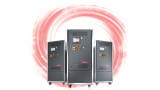
A Calidus GC installed in a typical process enclosure.
For some time, Illicit fuel providers in the U.K. had been illegally selling low duty fuels intended for agriculture, construction and other approved uses as road fuel. Road fuel is taxed at much higher rate; thus the fraudulent providers avoided paying millions in rightful taxes. The HMRC (Her Majesty’s Revenue and Customs) estimates that illicit market share for diesel is just under 1% in Great Britain and 8% in Northern Ireland. Overall, this represents an annual loss of around £100 million or close to $140 million US dollars in public revenue.
Authorities added markers to the low duty fuels to enable detection when the fuels were sold for road use, but the criminal fuel marketers found ways to remove or “launder” the markers out of the fuel. Recently U.K. and Irish revenue officials adopted a new marker that is more difficult to launder from the low duty fuels, but samples still needed to be transported to labs for testing, creating delays in detection and enforcement.
A Calidus GC Mobile GC System like the one used for HMRC fuel fraud detection.
In the latest HMRC initiative, a high-tech system employing Falcon’s ultrafast Calidus CS GC was installed in a mobile fleet of 49 HMRC road fuel testing unit vehicles throughout the UK and used to analyse fuel samples taken at the roadside and at retail premises.
The ultrafast GC’s speed, sensitivity and transportability made it a very attractive choice for such an application. Due largely to Falcon’s patented resistively-heated column module the Calidus CS GC cycles 10 to 50 times faster than traditional GCs. Speed was of the essence for the roadside analyses required by the HMRC programme.
In an application where an entire lab is effectively installed in a SUV, the Falcon GC’s small size and weight were also a huge advantage.
Also, the patented Falcon modular GC system design can incorporate two independently temperature-programmed column modules in one analyser to enable more powerful separations. The enabled heartcutting of specific components from one column module to another independent column module delivers separation and sensitivity unattainable with a single dimensional method.
In the application developed for HMRC a single GC configured with two column modules, a column switching heartcut valve and dual FIDs was employed. This design enabled detection of the HMRC fuel marker at a pass/fail level without false positives or false negatives and quantitative analysis down to the 125 ppb limit of quantification.
Falcon now offers mobile GC systems similar to the system employed by the HMRC fuel fraud detection program for other transportable applications.
The user sought to improve batch process control for food grade materials by reducing turnaround time for their GC-based endpoint measurements. Ending batches at reaction completion is optimum.
A Calidus GC system configured to batch process control.
In measurement for process control, whether in batch or continuous processing, time is critical. Timely measurement of process composition is needed for controlling to both product quality and profitability requirements. Over-processing consumes energy, reduces throughput and can negatively impact final product quality. Under-processing reduces yield, increases raw material costs and can negatively impact final product quality.
Analytical requirements included seven sample types with sample boiling ranges from about C3 to C50. The ultrafast Calidus system performed the measurements nearly 10 times faster than traditional methods, while meeting all repeatability and reproducibility requirements. Faster analyses meant faster, more optimised production for the user, with sustained or improved product quality and increased opportunities for reducing costs.
Falcon Analytical also developed a Calidus headspace unit for the analysis of certain oxides in fatty acids. The GC can quantify these important components in the 500ppb range with excellent repeatability and linearity.
Headspace gas analyses with or without heat is important to many users. The application shown here is just the first. Falcon expects to do analysis for residual monomer in polymeric products, residual solvents and even sparging water and wastewater for contaminants or pollutants. Trapping technology will also be deployed to produce a fully functioning purge and trap GC system.
CALIDUS delivers these measurements with excellent repeatability.
CALIDUS linearity for this analysis is also extraordinary.
PIN 27.4 Aug/Sept 2026


 Product directory


.jpg)