Air monitoring
Air quality has become one of the major environmental challenges of our time. With millions exposed to air pollution and increasingly strict regulations, the precision of pollutant data is critical. Calibration of air quality sensors is therefore essential to support informed decision-making, ensure compliance and safeguard public health.
In recent years, artificial intelligence (AI), particularly machine learning (ML), has entered this field. But can algorithms replace traditional calibration methods? Can we rely on data generated by models trained on historical environments? This article takes an impartial look at the strengths, risks and limitations of machine learning as a calibration method for air quality sensors, compared with scientifically validated approaches.
Calibration is a technical process designed to align sensor readings with the actual concentration of a given pollutant, following comparison with certified reference instruments. Methods include laboratory calibration and co-location with reference stations, ensuring that sensor data is accurate, traceable and compliant.
Machine learning, by contrast, trains a model using historical sensor and reference data to “learn” how to estimate pollutant levels based on sensor output and environmental variables such as temperature or humidity. While potentially useful in specific conditions, this approach has notable limitations when applied in real-world, dynamic environments.
While appealing in theory, several concerns arise when machine learning is used as the sole method for calibrating air quality sensors:
While ML can offer insights for pattern analysis and forecasting, it should not be mistaken for a calibration method. Experts agree: it can support calibration, but never replace it.
With the growing use of AI in environmental technologies, we must distinguish between what algorithms can assist with and what scientific standards demand. When dealing with air quality — where inaccurate data can pose public health risks or lead to regulatory breaches — trust in data cannot be based solely on past-trained models.
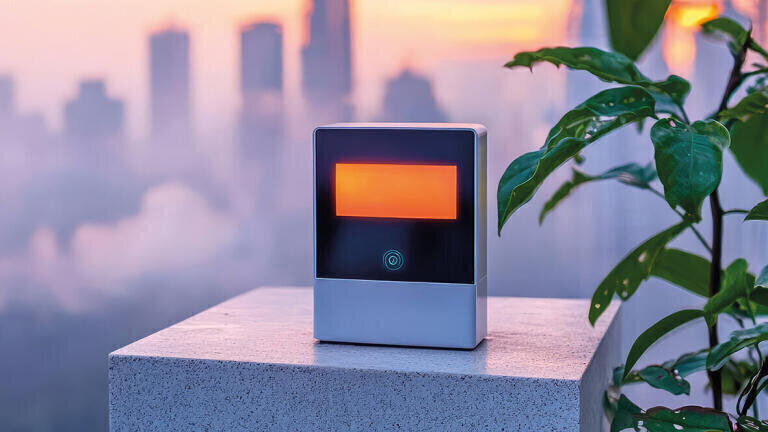
Many companies promote a robust approach combining technology and science: every sensor cartridge is individually calibrated with certified gas, validated in the lab and remotely adjustable. Built-in algorithms automatically compensate for environmental factors, ensuring reliable, site-independent performance. This delivers near-reference quality data at a fraction of the cost of traditional fixed stations.
In short, while machine learning has its place in air quality monitoring, only scientifically traceable calibration can ensure the kind of accuracy regulators — and citizens — can trust.
PIN 27.2 Apr/May 2026


 Product directory