.jpg)
Analytical instrumentation
Published over 7 years ago. See the latest and most current information on Analytical instrumentation.
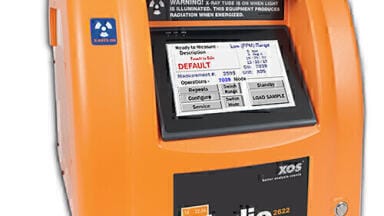
As regulations for sulfur maximums in the petroleum industry continue to drop, challenges surrounding compliance and product quality have increased. This has driven refineries to search for more precise sulfur analysis methods. Desulfurization expenses, which are costly, can be reduced by using one of several highly precise measurement techniques; but ensuring low variability in measurements done using these techniques is critical. These methods include D7039, D2622, and D5453, which use Monochromatic Wavelength Dispersive X-ray Fluorescence (MWDXRF), Wavelength Dispersive X-Ray Fluorescence (WDXRF), and Ultraviolet Fluorescence (UVF), respectively. ASTM PTP study findings for the Reformulated Gasoline (RFG) and Ultra Low Sulfur Diesel (ULSD) studies for these methods demonstrated that D7039 had the best reproducibility. Notably, however, a D2622 instrument such as XOS’ Sindie 2622 MWDXRF analyser can be used to meet the D2622 methodology with the precision of D7039. Download our whitepaper to learn more.
PIN 27.4 Aug/Sept 2026



 Product directory


.jpg)