Measurement and testing
Published over 16 years ago. See the latest and most current information on Measurement and testing.
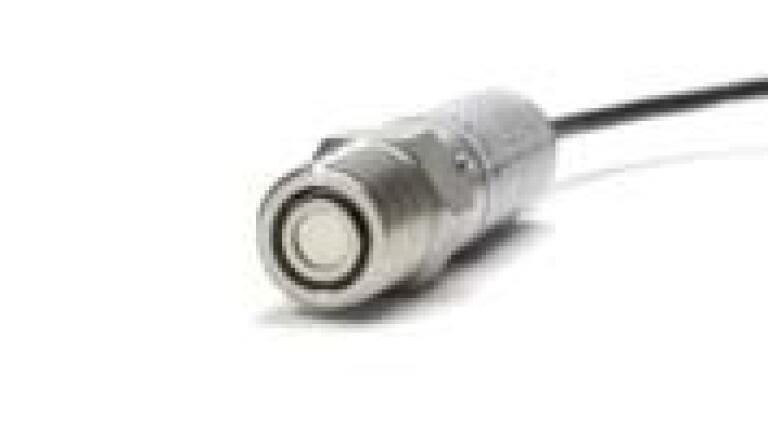
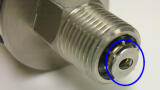
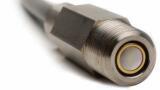
SenGenuity’s (USA) in-line/on-line, viscosity sensor provides in-situ, temperature-compensated viscosity measurement.
Viscosity is a good indicator of oil quality. The presence of water, fuel and other contaminants causes the viscosity of oil to decrease. The build up of soot and sludge in the oil causes the viscosity to increase. Therefore, monitoring oil viscosity can provide timely warnings of deteriorating oil quality.
Viscosity can be measured by placing a piezoelectric thickness shear mode (TSM) resonator (sensing element) in contact with oil. The top surface of the sensing element interacts with the oil forming a thin fluid layer (on the order of microns) that moves with the vibrating surface. The oil’s viscosity determines the thickness of the fluid layer that is hydro-dynamically coupled to the surface of the resonator. The shear wave interaction with the fluid changes with changes in viscosity and density, which can be measured by the electrical properties of the piezoelectric sensing element.
The ViSmart® viscosity sensor is ideally suited for measuring oil quality. While the sensor does not do away with laboratory analysis of oil, it does help system operators make use of laboratory services in a more intelligent way. Oil samples are sent for lab analysis based on the condition of the oil and not based on arbitrary time schedules.
Available today, the industrial grade ViSmart® viscosity sensor has a wide operating range that is unaffected by shock, orientation, or flow conditions
PIN 27.5 Oct/Nov 26


 Product directory


.jpg)













.jpg)




.jpg)