Analytical instrumentation
Published over 6 years ago. See the latest and most current information on Analytical instrumentation.
The measurement of manganese (Mn) in gasoline is demonstrated.
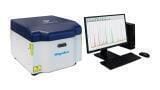
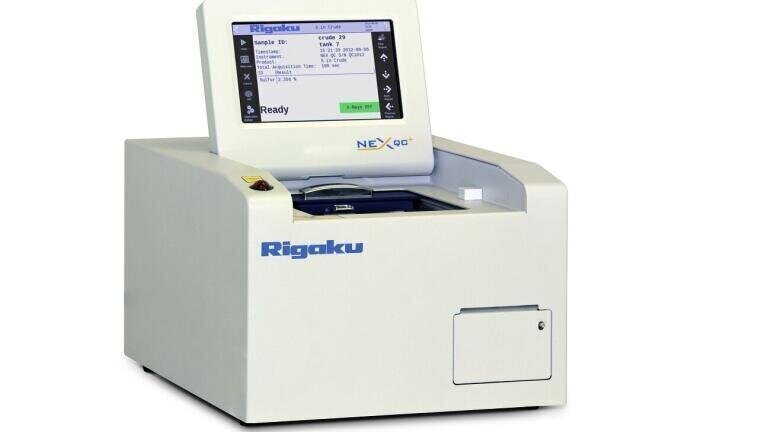
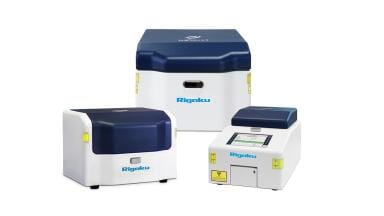
Methylcyclopentadienyl manganese tricarbonyl (called MMT or MCMT) is an anti-knock agent added to motor gasoline and Avgas to boost octane rating, replacing tetraethyl lead (TEL) in many regions of the world. In motor gasoline the Mn content is typically between 50-500 mg/kg, and can be as high as 3000 mg/kg (approximately 3 g/L) in Avgas. Reliably characterising the Mn content of gasoline ensures optimum engine performance based on the engine’s compression ratio and other geometrical and mechanical operating conditions. To meet the needs of the industry, Rigaku offers the NEX QC+ analyser, a simple and versatile benchtop EDXRF spectrometer for the analysis of manganese in gasoline.
Model: Rigaku NEX QC+
X-ray tube: 4W Ag-anode
Detector: SDD
Sample Type: Gasoline
Film: Chemplex Etnom (3um)
Analysis Time: 100 sec
Environment: Air
Ensure each sample is homogeneous and stable. Shake sample gently and allow any bubbles to settle. Fill a 32mm XRF sample cup with 4g of sample to ensure consistent sample depth. Etnom® film (3um) is used, which does not degrade quickly with gasoline or oxygenated gasoline. The sample cup lid must be vented with a small hole to ensure vapor pressure does not build. Due to high evaporation rate of gasoline, it is recommended to make the measurement immediately after filling the cup. [Note: Use of internal standard is not required.]
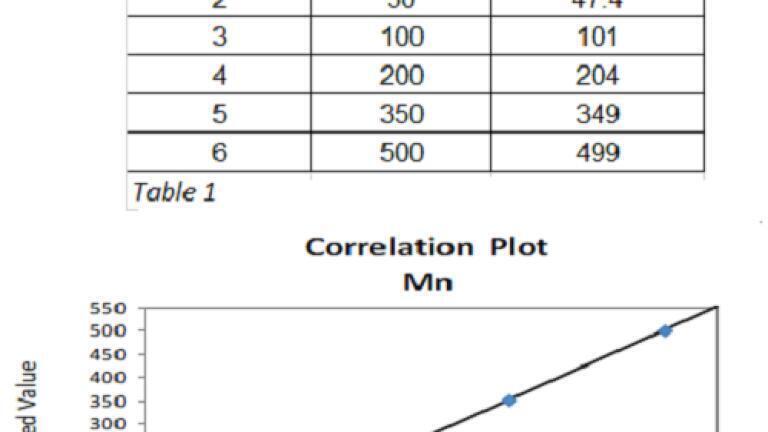
Empirical calibration is made using commercially available certified gasoline calibration standards containing the Mn additive. A typical calibration is demonstrated here for the range 25-500 mg/kg Mn.
See TABLE (Calibration)
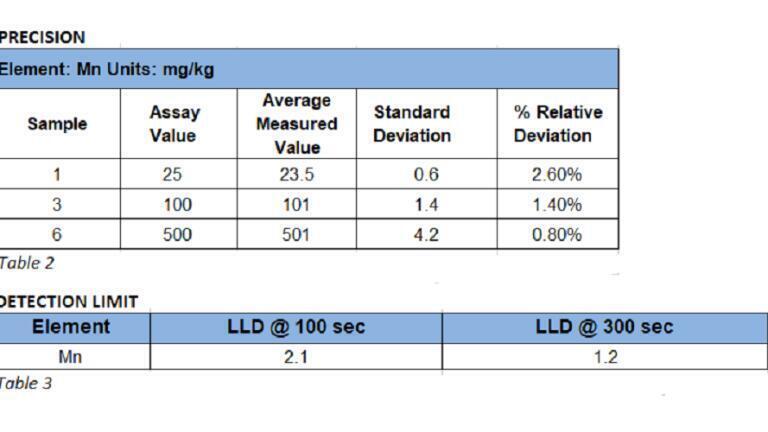
Instrument repeatability (precision) is determined by ten repeat analyses of each sample in static position using a 100 sec analysis time per measurement.
See TABLE (Precision)
The Lower Limit of Detection (LLD) is defined as three times the standard deviation of ten repeat analyses of a blank gasoline sample containing no Mn. The following typical LLDs are reported here using 100 and 300 sec measurement times.
See TABLE (Detection Limit)
The results shown here indicate the Rigaku NEX QC+ EDXRF analyser can be used to reliably measure Mn in gasoline and Avgas without the need to use an internal standard.
PIN 27.4 Aug/Sept 2026


 Product directory


.jpg)









.jpg)

.jpg)