Safety
Published over 10 years ago. See the latest and most current information on Safety.
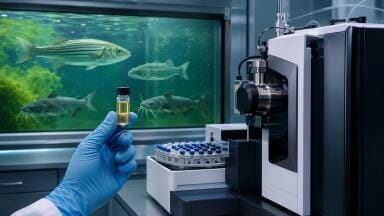
Thermal desorption (TD) is a widely used analytical method for measuring airborne concentrations of volatile organic compounds (VOCs) collected using sorbent tube samplers. The technique has greatly improved sensitivity over solvent desorption, which allows TD samplers to be used for passive (diffusive) sampling, even in scenarios where concentrations are likely to be very low. An example of this is the draft US EPA Method 325, which proposes the use of passive samplers with subsequent laboratory analysis by TD-gas chromatography for fence line monitoring for benzene and other VOCs around refineries.
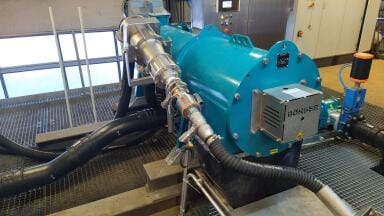
A wide variety of sorbent types are available, including porous polymers (e.g. Tenax TA™ and Chromosorb 106™); graphitized carbon blacks™ (e.g. Carbograph 5TD™ and Carbopack X™) and Carbonised Molecular Sieves (e.g. Sulphicarb™ and Carboxen 1000™). These sorbents have a variety of properties, the most important of which is sorbent strength. This, in turn, affects sampling characteristics such as breakthrough volume, diffusive uptake rate, storage stability and desorption efficiency. At the Health and Safety Laboratory (HSL), we have constructed a standard atmosphere system capable of loading up to 60 replicate sample tubes under controlled environmental conditions to investigate the sampling and analytical characteristics of a range of different sorbents.
Learning objectives:
1) present an overview of the HSL standard atmosphere test facility used to investigate sorbent tube sampling characteristics
2) present a summary of results with regard to breakthrough, desorption efficiency and other sampling characteristics
3) present an overview of how the test facility can be utilized to determine uptake rates for diffusive sampling.
PIN 27.3 June/July 2026

 Product directory