Measurement and testing
Published over 15 years ago. See the latest and most current information on Measurement and testing.
The rate at which natural biodegradation of petroleum hydrocarbons in groundwater occurs, is significantly increased when using the Waterloo Emitter™ from Solinst (Canada). This is made possible, as the Waterloo Emitter enables the controlled release of oxygen into impacted groundwater, creating ideal conditions to stimulate aerobic biodegradation, maximising cleanup efforts.
Operation is based on diffusion principles whereby a concentration gradient is set up between the inside of the Waterloo Emitter tubing and the groundwater. The transfer of oxygen takes place on a molecular level, providing a steady, regulated supply that is critical to the proper growth and maintenance of the natural in-situ microbial population.
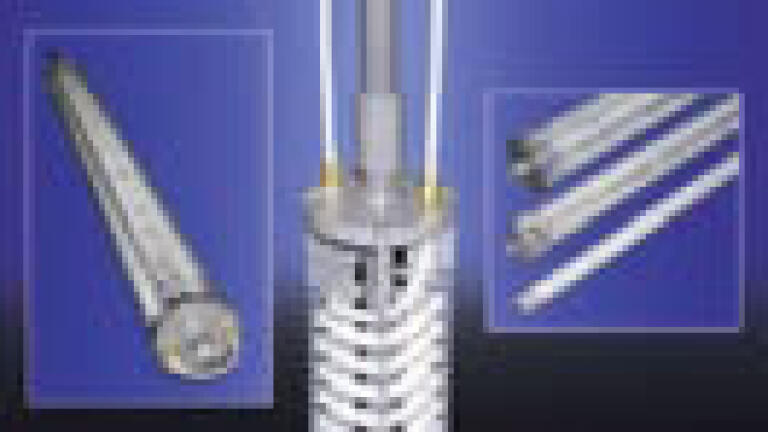
The patented technology consists of a PVC frame wrapped with silicon or LDPE tubing that can be pressurised to obtain the desired flow of gas, depending on site-specific needs. Sized to fit 50, 100 and 150 mm wells, Waterloo Emitters can be installed in stacks vertically or horizontally in a well and joined from one well to another, to ensure full coverage of the contaminant plume.
PIN 27.4 Aug/Sept 2026


 Product directory


.jpg)











.jpg)