Measurement and testing
Published over 5 years ago. See the latest and most current information on Measurement and testing.
Explosives have been used for 2000 years since the discovery of black powder and today remain the weapon of choice used by terrorists, often developed to a very sophisticated level to create mass destruction. The danger is that these materials are widely used by military services and within industrial applications, making explosives relatively easy to obtain compared with chemical and biological warfare agents, and often without many government controls.
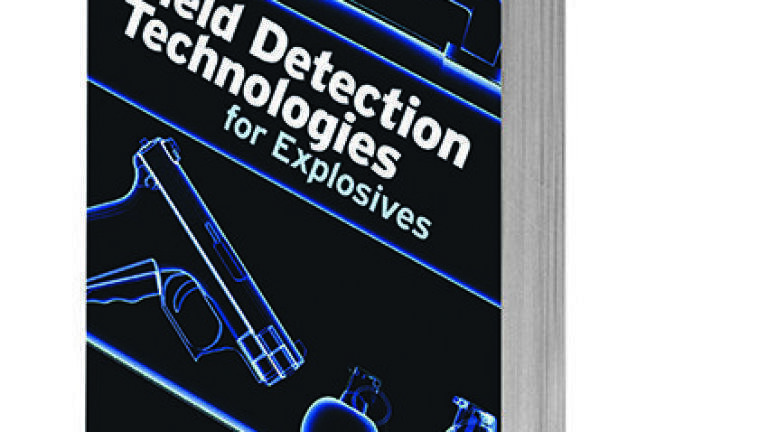
Early detection of these substances is one of the most effective ways to prevent attacks using explosives from occurring and numerous steps have been taken and much time and money invested in researching and evaluating new detection technologies by reliable equipment. This book, Field Detection Technologies for Explosives, introduces the basic concepts of commonly used explosives detection technologies and is an essential resource for novice or more experienced personnel working in the explosives detection field, as well as those with a general interest in this important subject.
Divided into Explosives Trace Detection Technologies and Bulk Detection Technologies, it’s written in a style that makes complicated technologies easy to understand, and focuses on the principles, instrumentation and applications of current technologies used to detect explosives in the field, rather than complicated equations. Technologies discussed include ion mobility spectrometry, chemiluminescence, mass spectrometry, X-ray, neutron and quadrupole resonance and millimetre wave imaging technologies, in addition to reviewing detection requirements, methodologies and sampling technologies.
Available now in print or as an eBook.
PIN 27.4 Aug/Sept 2026




 Product directory


.jpg)











.jpg)