Level measurement
Published over 6 years ago. See the latest and most current information on Level measurement.
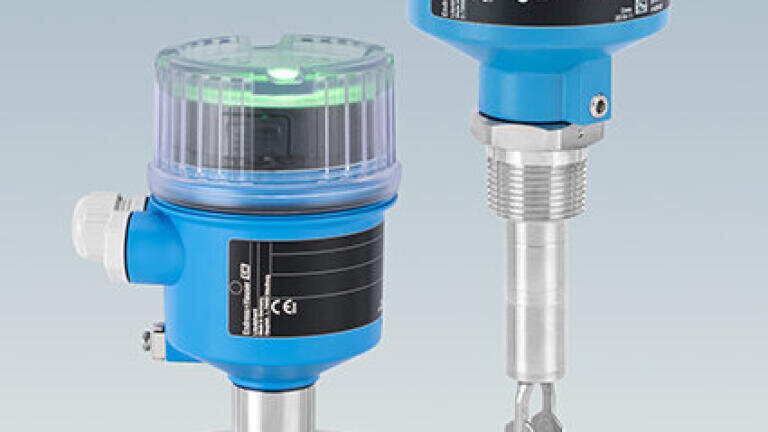
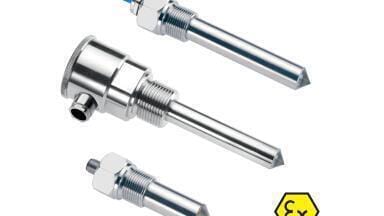
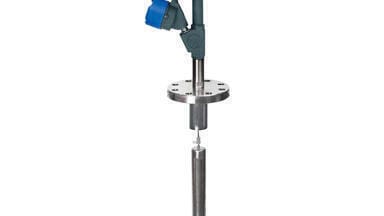
Endress+Hauser releases Liquiphant FTL51B and FTL41 vibrating fork (vibronic) level instruments. The FTL51B features Industry 4.0 and IIoT capabilities, including access via wireless Bluetooth technology, automatic proof tests and verification, and easy commissioning via a mobile device. In addition, operational clarity is provided by a high-visibility LED.
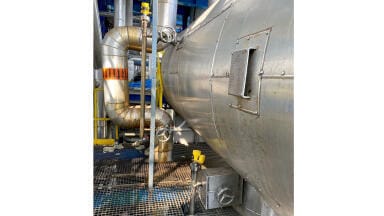
The Liquiphant FTL51B can be used in storage tanks, containers, and pipes for point level detection of all types of liquids. The instrument’s vibronic sensor is not affected by changing media properties, flow, turbulence, gas bubbles, foam, vibration, or build-up. The instrument works in process temperatures of -58 to 302°F (-50 to 150°C) and pressures up to 1450 psi (100 bar). It can be used in SIL2 and SIL3 hazardous locations, and has built-in automatic maintenance and verification functions.
The economical, general-purpose FTL41 is similar to the FTL51B, but works at lower pressures, up to 580 psi (40 bar), and with a narrower temperature range of -40 to 302 °F (-40 to 150 °C).
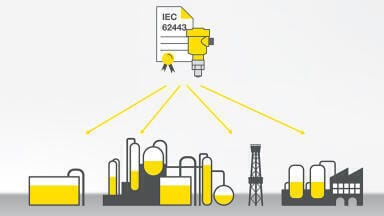
Both perform proof tests, with the FTL51B meeting SIL and WHG (Water Resources Act) requirements. The proof test can be activated remotely at a control system, or locally via a magnet or push button test. The proof test diagnoses the sensor for corrosion and build-up, and ensures the entire instrument is operating properly. Verification can be activated either manually or automatically via Endress+Hauser’s Heartbeat Technology, providing a verification report sufficient as documentation for various regulatory agencies.
Access via Bluetooth technology and a mobile device—such as smartphone—allows a user to identify each device, commission it, check the status, start a proof test, and download verification documentation. Bluetooth has a range of 33 ft, allowing a technician to access Liquiphant instruments installed in hard-to-reach locations, such as at the top of tanks.
PIN 27.4 Aug/Sept 2026


 Product directory


.jpg)















.jpg)