Analytical instrumentation
Published over 4 years ago. See the latest and most current information on Analytical instrumentation.
1,3-Butadiene is used to produce synthetic rubbers, nylon and plastics. As Butadiene contains approximately 100 ppm inhibitors and also forms Butadiene Dimer it is essential to control all product specifications. Da Vinci Laboratory Solutions introduces the All-In-One Butadiene Analyzer that determines the complete product specifications in a single run; including the hydrocarbon composition, impurities such as Dimer, inhibitors and other impurities. The All-In-One Butadiene Analyzer complies with ASTM D2426, ASTM D2593, ASTM D4424 and following test methods:
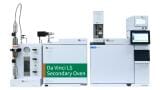
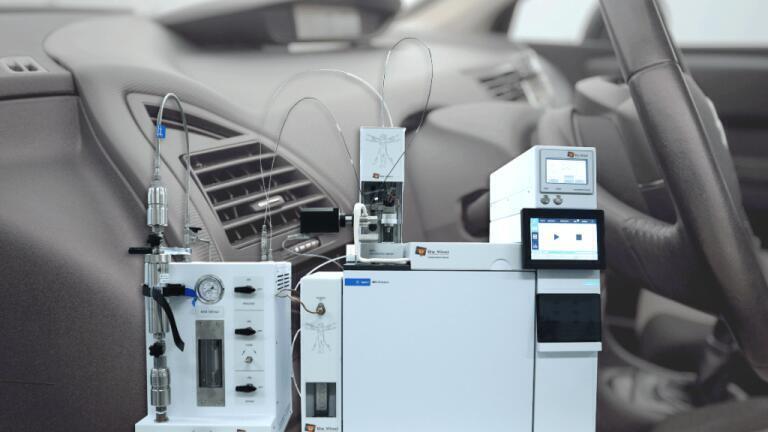
The All-In-One Butadiene Analyzer is based upon the Agilent 8890 Gas Chromatograph (GC) and consists of two channels. Each channel is configured with its own sampling technique and detector. The dual channel configuration enables a simultaneous analysis of the Butadiene specifications within 30 minutes.
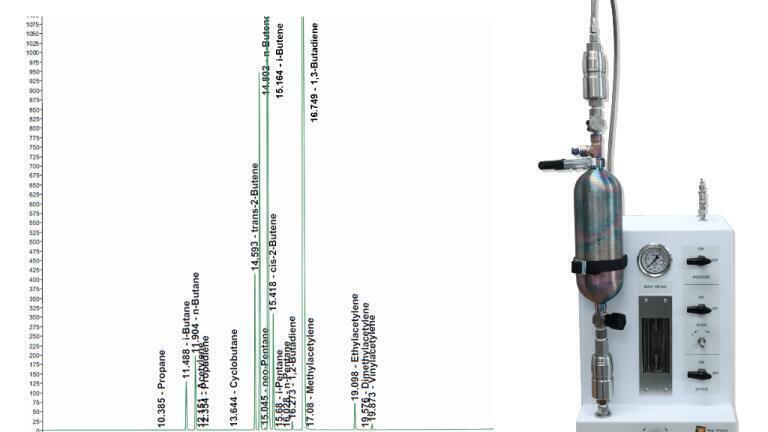
The front channel is configured with a Liquid Sampling Valve and/or a Gas Sampling Valve for the analysis of:
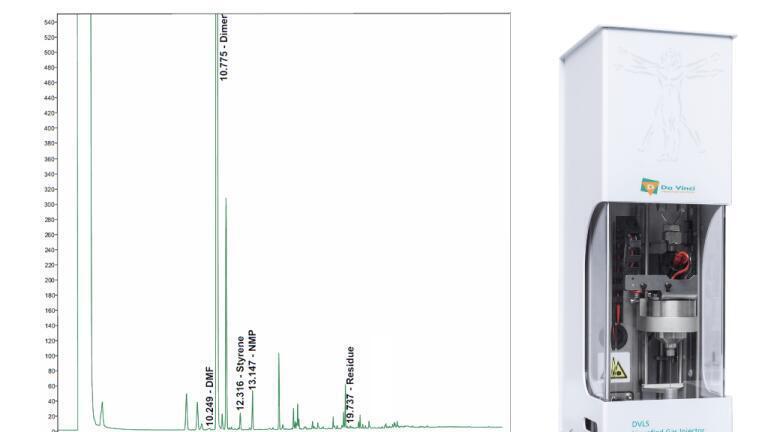
The back channel is configured with a Liquefied Gas Injector for the analysis of:
The Liquefied Gas Injector (LGI) is a dedicated GC solution for the direct injection of heavier components in light matrices such as C3 - C4 streams. The safe direct injection of the LGI requires only a small amount of the Butadiene sample.
The LGI is used to achieve sub ppm level detection limits for the analysis of traces and complies with ASTM D2426. It can be used as an alternative to ASTM D1157 for determining TBC inhibitor and to ASTM D1025 for the analysis of Residue (C10 - C24 oily residue).
To allow a safe and representative sample introduction of a (liquefied) gas Da Vinci Laboratory Solutions developed the DVLS Pressure Station. The Pressure Station introduces a (liquefied) gas sample into a chromatographic system and keeps the pressure at a constant level.
The sample cylinder is mounted onto the Pressure Station using quick connectors. For liquefied gas samples the Pressure Station adds high pressure Nitrogen to the sample cylinder, which controls the outlet pressure and flow. The sight glass enables a visual check of the liquid phase of the sample. The sample is introduced as a liquid using an external injection device such as a Liquefied Gas Injector or a Liquid Sampling Valve. The Pressure Station is configured with a vaporizer to avoid accumulation of the waste injection. The waste sample is vented to a central waste system to ensure laboratory safety.
PIN 27.4 Aug/Sept 2026

 Product directory


.jpg)









.jpg)

.jpg)

.jpg)

.jpg)