Analytical instrumentation
Published over 7 years ago. See the latest and most current information on Analytical instrumentation.
While Venezuela one reigned as the biggest oil producer in Latin America, the country ended 2018 on a sour note, with overseas sales tumbling to the lowest levels seen in in almost three decades. Despite proven oil reserves of nearby 300 billion barrels, last year Venezuela exported just 1.245 million barrels a day, a figure that hasn't been recorded since 1990.
The downturn is intrinsically linked to the current economic and humanitarian crisis, which is unfolding under the regime of President Nicolás Maduro. In response to reports of dictatorship, destabilisation of democracy and violations of human rights, the United States has imposed financial sanctions on Venezuela and increased the pressure on its flailing economy.
Beyond the United States, the US Treasury has warned Venezuela to brace for even harsher sanctions that will resemble the strategies used to target Iran. Not only will the sanctions ban US companies from purchasing Venezuelan oil, but they will also block companies from doing business with PDVSA via the US financial system. As a result, the restrictions will extend far beyond US shores and make it difficult for PDVSA and the Maduro administration to secure destinations for Venezuelan oil.
The country has also landed itself in hot water with creditors like ConocoPhillips, which is forcing Venezuela’s state-run oil company to settle a US$2 billion debt. This includes cash payments, as well as around 1.5 billion barrels of PDVSA crude and counting.
According to OPEC, oil is currently Venezuela’s main source of revenue, accounting for around 98% of export earnings. The commodity finances the presidency of Nicolás Maduro, though without any buyers the country could quickly run out of cash and slip into an even more severe humanitarian crisis. While some have praised the United States for its hard-line approach, others warn that the strategy is destructive, ruthless and irresponsible. Driving the country's economy into the ground could turn both the military and Venezuelan citizens against Maduro, though it could also deepen the crisis and take a horrific toll on innocent people, who the Trump administration claims it is trying to save.
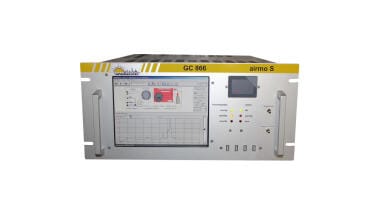
From political instability to weakening crude prices, the nature of the oil and gas industry means refineries are constantly exploring new ways to maximise efficiency. Introducing next-generation MWDXRF analysers, 'Precision Comparison Between ASTM Test Methods D7039, D2622, and D5453' spotlights the value of a simple, streamlined elemental analysis process with high precision and reliability.
PIN 27.4 Aug/Sept 2026




 Product directory


.jpg)








.jpg)


.jpg)