Analytical instrumentation
Published over 9 years ago. See the latest and most current information on Analytical instrumentation.
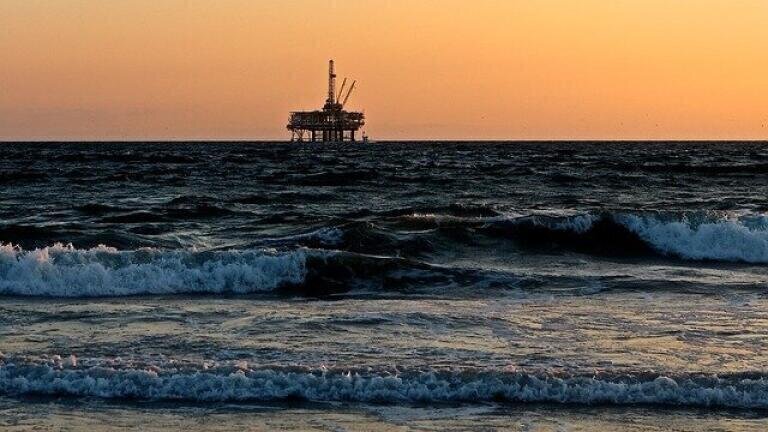
There’s no scenario where an oil spill isn’t an environmental disaster. But according to scientists at the University of Aberdeen, cold water can hinder the work of oil-eating bacteria that naturally occurs in the ocean. This means that in deep, icy cold water the environmental consequences of a major oil spill could be much worse than in milder drilling environments.
The findings come from one of Scotland’s leading universities, and question the performance of oil-degrading micro-organisms in cold water. Studying an area west of Shetland, the report found that degradation ability was significantly lower at sub-zero temperatures.
According to the team, bacteria played a pivotal role in breaking down oil deposits in the Gulf of Mexico following the Deepwater Horizon disaster in 2010. Thanks to warm conditions, the bacteria was able work much faster. But in colder temperatures, Mother Nature’s clean-up efforts may not be as efficient.
The study was published in Scientific Reports, with researchers confirming that hydrocarbon degradation in sediments at 0ËšC is significantly slower than at 5ËšC.
Prof Ursula Witte, senior author of the study explains, "Depleting oil reserves has forced the industry to explore progressively deeper waters, and the dramatic shrinking of Arctic sea ice means that previously inaccessible reserves are now considered for exploration.” As a result, she stresses that "Understanding the environmental implications of an oil spill in the cold and deep ocean is therefore urgent to improve our response to a potential spill.”
Even more alarming was the fact that certain hydrocarbons that were tested didn’t show any detectable levels of degradation at temperatures of 0ËšC. This suggests that the impact of oil contamination at near zero or sub-zero temperatures could have a much more severe impact on the marine environment.
The oil industry was quick to comment, though isn’t about to shut up shop just yet.
Mick Borwell, HSE policy director of industry body Oil and Gas UK says that while the organisation does welcome data on hydrocarbon-degrading bacteria from the Faroe Shetland channel, the findings “represent the first stage in research of this kind and further studies will be required.”
He adds that "It is important not to draw conclusions from this work about the industry's oil spill response effectiveness."
In the event of a spill, technology plays a central role in testing. Now, scientists have combined Classical InfraRed (IR) spectroscopy and the CFC-free solvent cyclohexane to create a hydrocarbon measurement technique that’s both highly accurate, and environmentally safe. Find out more in ‘Ecological and economical measurement of oil-in-water without compromising accuracy.’
PIN 27.4 Aug/Sept 2026



 Product directory















.jpg)