Pour point
Published over 7 years ago. See the latest and most current information on Pour point.
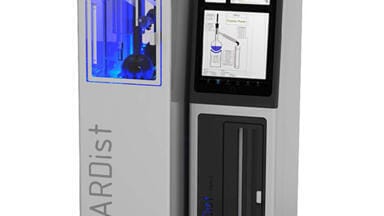
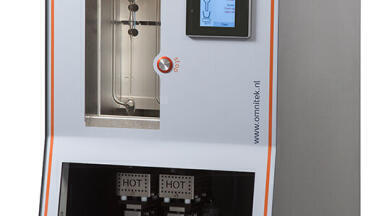
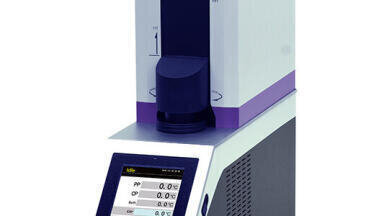
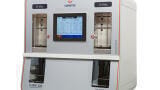
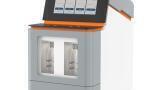
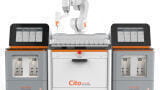
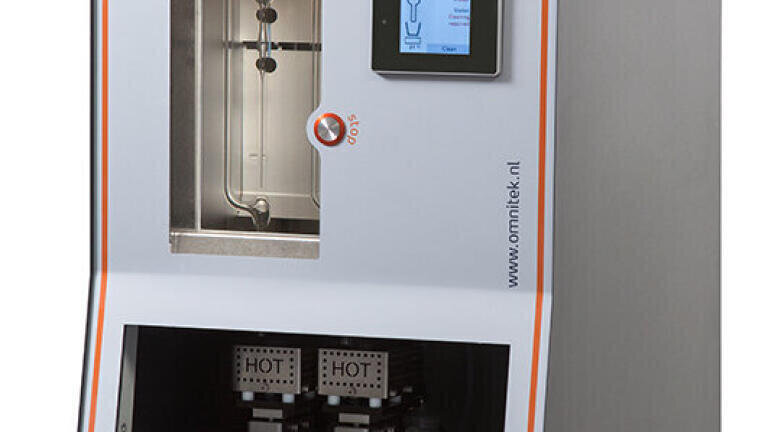
Omnitek have launched a fully automatic viscometer for highly viscous samples up to 120,000 mm2/s, specifically developed to cover sample types which pose great challenges to automatic sampling, measurement and cleaning because of their high pour point and viscosity.
The instrument was especially developed for demanding applications of high temperature and high viscosity products such as vacuum residue, additives, crude oils, waxes, heavy fuel oils, polymers, asphalts, etc. Because of the problems associated with heating, sampling, measuring and cleaning these types of samples, users were forced to resort to manual processing, which is a long and tedious process. Featuring a sample preheater and covering a range up to 150°C and 120,000 mm2/s, the BitUVisc finally offers users a way of automatically measuring these types of samples, resulting in very substantial time savings. By implementing specially designed duplo measurement tubes based on the proven Ubbelohde viscometer type, the precision of the obtained results far exceeds requirements in ASTM D445 and D2170. An innovative cleaning system ensures that even the toughest samples are cleaned effectively from the inside and outside of the tube, preventing any cross-contamination.
PIN 27.4 Aug/Sept 2026



 Product directory


.jpg)











.jpg)