Elemental analysis
Published over 5 years ago. See the latest and most current information on Elemental analysis.
From pharmacology and drinking water quality to oil and gas, elemental analysis has played a key role in advancing modern science. Analysing the unique elemental composition of a material unlocks a deep understanding of how it can be used and how it will react with other substances. The process has evolved and advanced over the decades, with scientists continually developing new ways to map elemental composition. Here’s a look at how elemental analysis has changed over time:
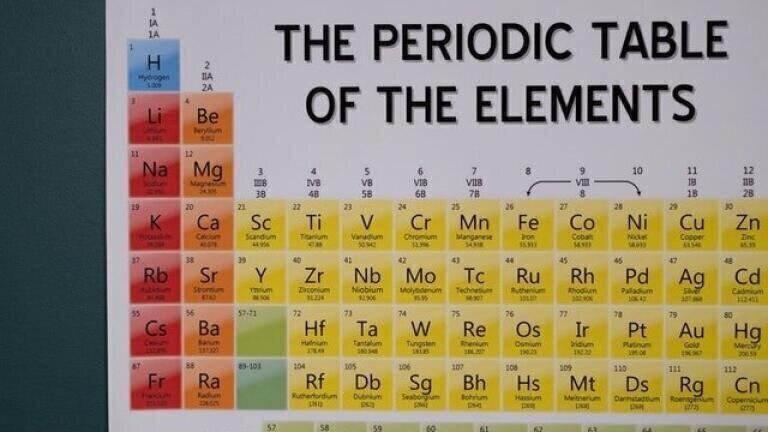
Elemental analysis is founded in the periodic table, a tabular display that sorts the chemical elements according to atomic number, configuration of electrons and chemical properties. Sorting the elements in this way reveals periodic trends and creates a sense of order.
The development of the periodic table is credited to Russian chemist Dmitri Mendeleev, who developed the vertical table layout in 1869. He even left gaps for undiscovered elements that he suspected existed but had yet to identify. While Mendeleev receives most of the credit, he wasn’t the first scientists to attempt to group the elements based on properties. French chemist Antoine Lavoisier experimented with the idea in 1789, with German chemist Johann Döbereiner also recognising and grouping elements with similar properties in 1829.
In 1873 a team of scientists developed what is widely recognised as the first flame photometer. As well as analysing an unknown sample, the instrument used a second flame to analyse a sample of a known concentration. The emission intensities of each flame were then compared, allowing scientists to calculate sodium concentrations to within 5% accuracy.
In the 1980s Canadian-based company MDS Sciex launched the first commercial Inductively Coupled Plasma Mass Spectrometry (ICP-MS) system. This marked a new era for elemental analysis and allowed scientists to accurately measure elements at trace levels. Around the same time, German company KONTRON developed Inductively Coupled Plasma Optical Emission Spectroscopy (ICP-OES) instruments, with the use of argon gas promising lower detection limits and higher accuracy.
Founded in 1902, ASTM International develops and publishes more than 12,000 standards every year. Hundreds of these standards are specific to the energy industry and set an international benchmark for elemental analysis of oil and gas. Today methods like the Standard Test Method for Sulphur in Petroleum Products by Wavelength Dispersive X-ray Fluorescence Spectrometry are used in laboratories around the world, offering a fast and accurate way of measuring sulphur content.
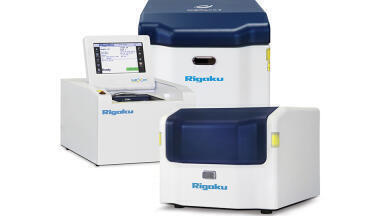
Today, companies like TE Instruments are at the vanguard of advances in elemental analysis. Find out more about the latest Xplorer-V analyser in ‘Total Sulfur and Total Nitrogen analysis – Horizontal versus Vertical furnace arrangement.’
PIN 27.4 Aug/Sept 2026





 Product directory