Biofuel industry news
Published over 3 years ago. See the latest and most current information on Biofuel industry news.
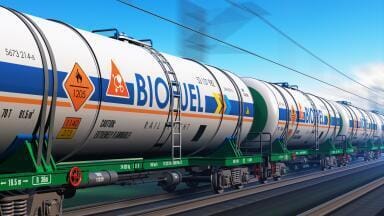
Last October, India’s Minister of Petroleum and Natural Gas, Hardeep Singh Puri, made a startling announcement. According to the Minister, the nation intends to establish an international alliance to promote the uptake of biofuels. As things stand, India ranks third globally for oil consumption, importing, on average, about 85% of its crude in the last few years. But, in a bid to meet its 2070 emissions targets, 12 bio-refineries are now in the works, capable of converting crop stubble, plant waste and solid waste from municipal areas into fuel.
With India’s G20 presidency imminent, it is believed that discussions will be held in the run-up to secure this proposed partnership on biofuels. If all goes to plan, this new global alliance, which has the potential to completely change the playing field in the coming years, could be officially launched during this September’s G20 summit, which will be hosted in New Delhi. In all likelihood, the plan will mirror a previous partnership, itself a mini-revolution in the global energy sector, between Prime Minister Narendra Modi and then-President Francois Hollande, called the International Solar Alliance (ISA), launched as part of the 2015 climate conference, COP21, in Paris, which finalised the historic Climate Accords. Still going strong, the ISA is headquartered in Gurugram on the outskirts of Delhi.
There is considerable debate as to where the new alliance will be headquartered, though. For Indian officials, the preferred choice would be Bangalore. Indeed, Minister Puri dropped a few hints in this direction in a recent interview, stating that: “Bangalore is a city that has grabbed attention not just within country but also globally due to its spirit of innovation, entrepreneurs' talent and startups, particularly in the energy sector.” But Minister Puri also hinted that he had been made aware of surprising interest in the alliance from Russia and Brazil. It’s worth pausing to reflect on the magnitude of these implications. Russia is the world’s second largest producer of both natural gas and oil. Brazil is not just the largest oil producer in South America, it ranks eighth in the world as both a producer and consumer of oil – not to mention the world’s most sizable ultra-deep reserves. Brazil’s most populous city, Sao Paulo, will offer stiff competition to Bangalore in hosting the proposed alliance on account of Brazil’s advanced biofuels industry.
Wherever the International Biofuels Alliance ends up being headquartered, more than 150 key decision-makers on energy transitions from 29 countries and 10 international organisations will be present during the three-day Energy Transition Working Group meeting. If such an alliance can emerge from these meetings, with some of the world’s biggest fossil fuel producers and consumers in the mix, it is likely to exercising a crucially decisive influence over the ongoing global energy transition.
PIN 27.4 Aug/Sept 2026


 Product directory


.jpg)




















.jpg)