.jpg)
Analytical instrumentation
Published over 6 years ago. See the latest and most current information on Analytical instrumentation.
Aromatic Hydrocarbons and Related Chemicals need to be ultra-pure and free of undesired compounds such as Nitrogen, Sulfur, and Chloride. The presence of these compounds may contribute to emissions, be harmful to catalytic processes, and leads to corrosion. Petrochemical companies monitor these elements in process feeds and finished products to determine whether their refining process optimisation measures are effective. The finished Aromatic Products generally have specification limits at trace level (ppb). Elemental combustion analysis followed by Chemiluminescence, UV-Fluorescence, or Microcoulometric detection is the only suitable technique for determination of ultra-low Nitrogen, Sulfur, and Chloride concentrations.
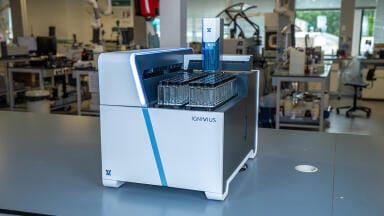
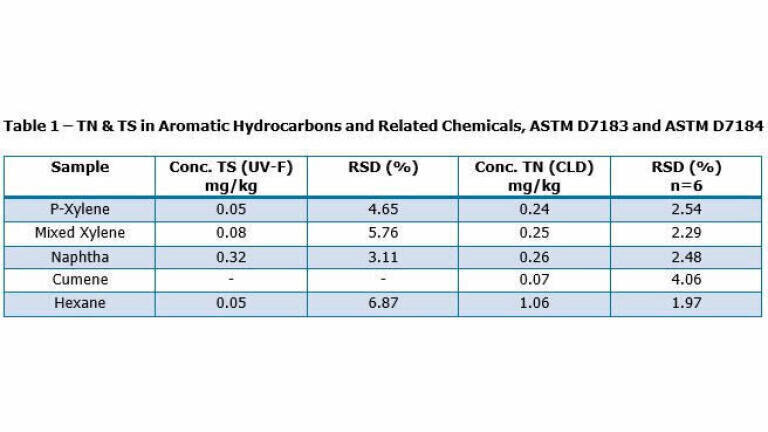
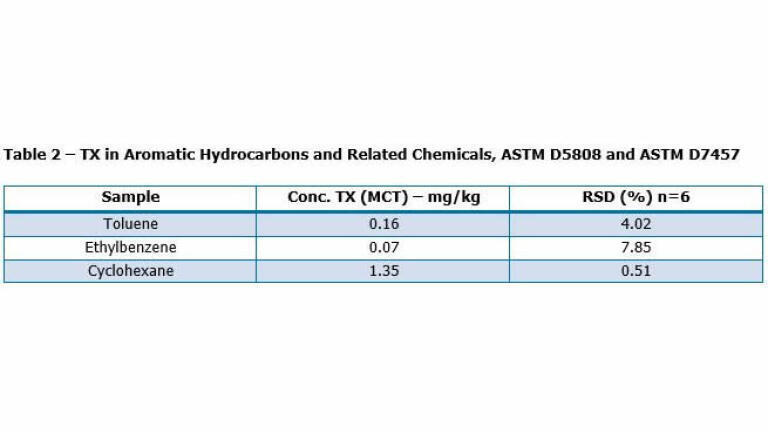
The XPLORER Series elemental combustion analysers are recognised as a premium solution to accurately analyze the amount of Total Nitrogen (TN), Total Sulfur (TS), and Total Chloride (TX) in petrochemical matrices. The XPLORER Series fully comply with the ASTM D7183 (TN), ASTM D7184 (TS), ASTM D5808 (TX), and ASTM D7457 (TX), for the analysis of Aromatic Hydrocarbons and Related Chemicals. The XPLORER Series cover a broad analytical scope, ranging from low ppb to high ppm concentrations. International refining companies select the XPLORER Series as trusted solution to carry out these challenging applications.
The tables (see slideshow) demonstrate high sensitivity of the XPLORER Series, even at concentrations below the scope of the above mentioned international test methods. All samples were introduced by the ARCHIE liquids autosampler using a sample volume of 100 µL. Calibration lines were created by auto-dilution of stock standards and provide linear regressions (r2) >0.999. Subsequently, all reported relative standard deviations (RSD) are well below the acceptable repeatability limits (r).
Please visit our website to find out more about these powerful multi-matrix analysers!
PIN 27.4 Aug/Sept 2026


 Product directory


.jpg)









.jpg)

.jpg)