Analytical instrumentation
Published over 3 years ago. See the latest and most current information on Analytical instrumentation.
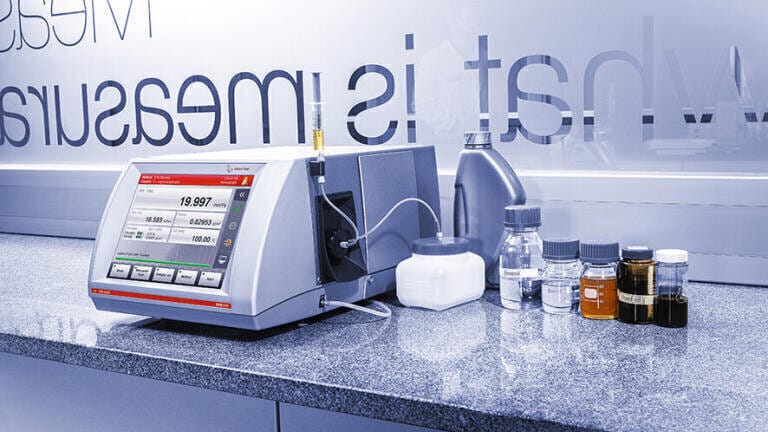
ASTM D7042 is a well-accepted tried-and-tested standard that describes the measuring principle of Anton Paar’s SVM viscometers. Many different samples can be specified according to more than 50 further standards referencing D7042. The same is true for the ISO equivalent 23581. Among the petroleum industry standards referencing ASTM D7042 are:
(Bio-)diesel (EN590, EN 16734, EN 16709, D975, D6751, EN14214, D7467)
Aviation turbine fuels (D1655, D7566, D7223, JIG AFQRJOS, Def Stan 91-091)
Hydraulic oils (D6158, D8029)
Kerosene (D3699)
Fuel oils (D396)
Gas turbine fuels (D2880)
Burner fuels (D6448, D7666)
Engine oil (SAE J300)
Performing measurements with Anton Paar’s viscometers in compliance with ASTM D7042 has an array of benefits:
Flexibility: You obtain multiple parameter besides kinematic viscosity, including dynamic viscosity and density.
Error minimization: You use a single measuring cell for the whole viscosity range, avoiding errors due to the wrong choice of capillary, and minimizing costs and quality control efforts.
Low sample and solvent volume: For standard compliant results you need only a minimum of 5 ml of sample and 3 mL of solvent.
Fast heating and cooling: The thermoelectric heating and cooling system means you don’t need a liquid bath for temperature control, also reducing the cost of bath liquid and bath maintenance.
Ease of use: You simply fill the sample from a syringe or use the autosampler and press start.
Immediate kinematic viscosity value output: You don’t get just a flow time result (as with manual glass capillary viscometers). This reduces costs as no additional equipment (PC, software, etc.) is required and no errors can occur during manual calculation.
PIN 27.4 Aug/Sept 2026
 Product directory


.jpg)









.jpg)

.jpg)

.jpg)
.jpg)