Particle counting has long been recognized by maintenance professionals as an important tool to ensure new and in-service lubricant cleanliness. However, in most circumstances, particle counting is not applied to in-service oils as a wear monitoring tool. Particle counting is applied to in-service hydraulic oils, steam turbine oils and other applications in which wear is minimal and particle counting is done mainly as a cleanliness check. The particles counted are usually assumed to be contaminant particles, not wear particles.
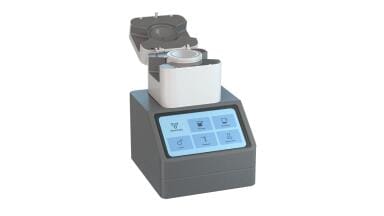
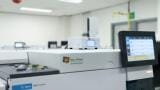
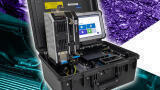
In-service lubricating oils from other applications such as gears, transmissions and engines are typically not subjected to particle counting. The LaserNet Fines (LNF) by Spectro Incorporated was developed primarily to detect abnormal wear in samples containing high particle concentrations and samples that may be black from diesel engine soot. These are samples that are not conveniently monitored by conventional automatic particle counters. However, it is important to note that the LaserNet Fines was developed primarily not as a particle counter, but as a wear debris analyzer. It has the unique ability to recognize particle shape, classifying particles as sliding, cutting, fatigue, nonmetallic, fibers, droplets and air bubbles, thus providing guidance regarding the type of wear occurring within the machine from which the sample was taken. The LNF also happens to be an accurate and reproducible particle counter.
This paper reviews particle counter history, explains difference in maximum diameter vs. equivalent circular diameter methodology, and provides detailed LaserNet Fines performance on in-service oils.


 Product directory


.jpg)





.jpg)





.jpg)