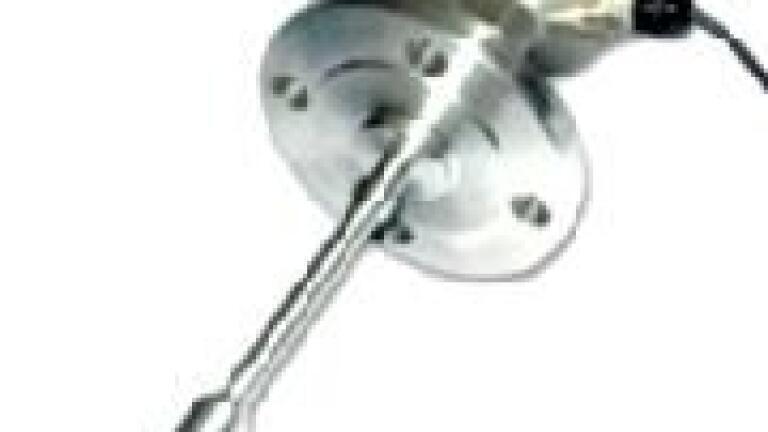
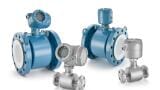
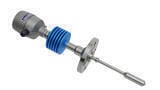
The XL7-150 from Hydramotion (UK) Ltd has been named viscometer of choice by a Japanese team investigating the on-line determination of petroleum properties.
In the refining process, petroleum products of uniform quality must be produced from crude oil with very variable composition and physical properties. It is therefore essential to monitor the process continuously so that adjustments to the operating conditions can be made without delay. Along with refractive index and density, viscosity is a key control parameter. Researchers at the Japan Petroleum Energy Center were looking for a number of devices, including a viscometer, that would enable them to carry out real-time n-d-M analysis on the Fluid Catalytic Cracking Unit feedstock*.
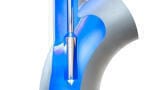
The team used the Mizushima Refinery in south-western Japan as a test bed for a number of high-performance online sensors. Viscometers from various suppliers were examined, and “after checking them for configuration, ease of maintenance, measurement accuracy and safety, the XL7-150 viscometer from Hydramotion was chosenâ€. Advantages of the XL7-150 highlighted by the team included the fact that the viscometer “is of very simple structure and ... [has] no moving partsâ€. They were also impressed that “versions of this viscometer that measure viscosity at accuracies of 1 × 10⁻⁵ and 1 × 10⁻⁶ have come on the market … still another reason why it was selected is the broad range of choice it offers in terms of product accuracy†(sic).
Sensor performance was tested in both the laboratory and the field. The instrument was used on the feedstock line to measure viscosity at 100°C and 75°C, from which the viscosity index could be calculated. The results were combined with separate density and refractive index measurements to give the final n-d-M analysis. The team were pleased to find that changes of as little as 0.01 cP could be detected.


 Product directory












.jpg)






.jpg)