Analytical instrumentation
Published over 17 years ago. See the latest and most current information on Analytical instrumentation.
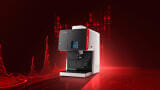
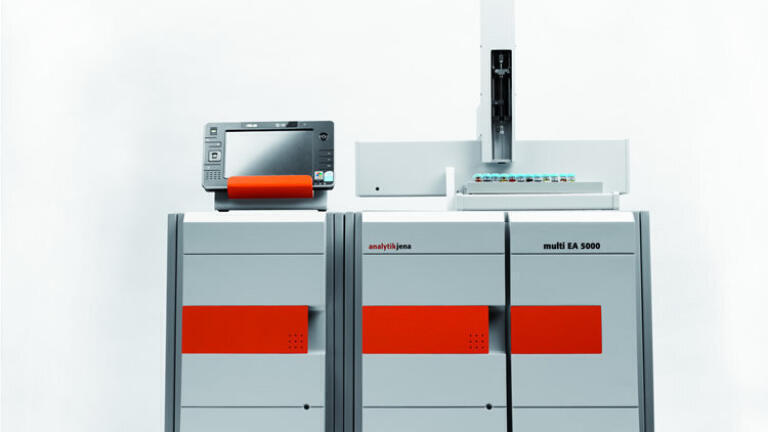
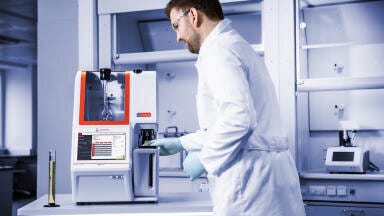
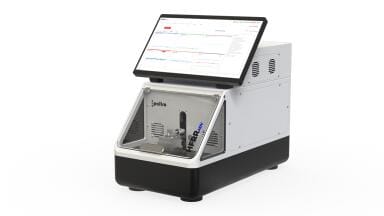
Thanks to the flame sensor technology the new elemental analyzer multi EA 5000 guarantees matrix-optimised, quantitative combustion. Even unknown samples, whose properties are unidentified, can be analysed soot-free, precisely and reliably today. Complete combustion occurs by means of intelligent process guidance in which the sample is first pyrolysed using inert gas. The pyrolysis products are then burned in the pure stream of oxygen. This is when the actual oxidation process takes place. The flame sensor monitors the flame which is formed – this is the key to complete oxidation, the prevention of soot formation and thus a guarantee for extremely accurate readings.
The advantages at a glance:
- a single method for sample matrices with the same state of aggregation
- matrix-dependent adjustment of process parameters is now redundant
- no prior knowledge of the combustion behaviour of the samples required
- no time-consuming method development
- uniquely high sample quantities
- a guaranteed quantitative sample decomposition, no more soot formation in systems
- improved precision thanks to complete oxidation
- minimised effects of sample matrix
- clearly reduced maintenance effort
The multi EA 5000 – versatile, reliable, easy to operate and capable of so much more than just elemental analysis. C, N, S and Cl from solid, liquid,, paste-like and gaseous samples are only a small part of what it can do. TOC, EOX and AOX/TOX analyses are further areas of analysis easily covered by it. This makes the multi EA 500 a universal talent to be used in various fields such as petrochemistry, environmental analysis, pharmacy, the chemical industry and materials testing.
For more information on the multi EA 5000 Click Here
PIN 27.4 Aug/Sept 2026



 Product directory


.jpg)









.jpg)

.jpg)