|
{OnlineVersion} 
May 2026 eBulletin 
New Capabilities for Precise Total Nitrogen (TN) and Total Sulfur (TS) Analys... 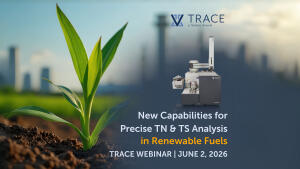
As renewable fuels continue to expand across global energy markets, laboratories face increasing pressure to deliver accurate, reliable and efficient Total Nitrogen (TN) and Total Sulfur (TS) analysis. New fuel types, evolving feedstocks, and stricter environmental regulations are drivi...
 (1).jpg)
The growing importance of wire corrosion testing across modern industries 
As various industries push toward greater efficiency, electrification, and advanced materials, understanding fluid-metal interactions has become critical to ensuring system reliability. Corrosion is a subtle yet highly destructive mechanism that can compromise electrical systems, degrad...
Precision by Weight: The Critical Role of Gravimetric Blending in Fuel Certif... 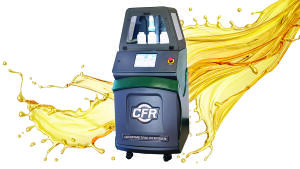
In the demanding world of fuel research and certification, the margin for error is nearly non-existent. To meet the rigorous standards of ASTM D2699 (RON), D2700 (MON), and D613 (Cetane), researchers and engineers rely on the absolute precision of gravimetric blending. Unlike volumetric...

eralytics announces the publication of the new global test method ISO 24966... 
The future of flash point testing has reached a new global milestone. Following the publication of the latest international standard for the Modified Continuously Closed Cup (MCCCFP) method, the eraflash series is now also fully compliant with ISO 24966.The publication of ISO 24966 mark...
Autonomous and innovative analytical systems for identification and quantific... 
Air pollution remains one of the most pressing environmental challenges in Europe, with Volatile Organic Compounds (VOCs) playing a critical role in the formation of ground-level ozone and secondary particulate matter — pollutants known to negatively impact human health and the enviro...
ABB boosts emissions monitoring with lowest certified measurement ranges to date 
ABB has launched the ACF5000 LCS (Low CEMS Specialist), the only certified low-range Continuous Emission Monitoring System (CEMS) on the market. Built to meet the strictest requirements as benchmarked by the EU’s Industrial Emissions Directive (IED 2.0), it enables operators to comply...
More fuel types, more analysers: what shipping’s fuel shift means for measure... 
Alternative shipping fuels is no longer a speculative niche.According to Lloyd’s Register’s January 2026 review of Clarksons data, shipowners ordered 590 merchant and leisure vessels in 2025 that will be capable of operating on alternative fuels at delivery, totalling 45.5 million g...
Why analyser validation is becoming a bigger process problem 
For years, process-stream analysers have been sold on a simple promise: faster data, faster decisions, and less dependence on waiting for laboratory results. In petrochemicals, that promise still holds.But as feedstocks and fuels become more variable, the harder question is no longer wh...
Brazil may be the centre of the hydrogen economy - but it needs instrumentation 
A new Brazilian study suggests the country’s hydrogen challenge is not simply where to make green hydrogen, but how to connect renewable-rich production zones with industrial demand. For process industry suppliers, that shifts attention from electrolysers alone to the monitoring, ana...
Europe has six weeks of jet fuel left: what it means for SAF and fuel quality... 
Europe’s jet fuel alarm should not be read simply as an airline panic story. The more revealing angle for a process and analytical audience is that a geopolitical shock has suddenly exposed how dependent aviation still is on a tightly balanced fuel system, and how quickly that becomes...
ASTM gives waste plastic process oil a test framework 
Waste plastic process oil has spent years in an awkward position inside the petrochemical sector. It has been talked about as a circular feedstock, promoted as a route into chemical recycling, and trialled in refinery and petrochemical assets, but it has often lacked the analytical clar...
EU sustainable aviation fuel rules may increase costs and energy use 
New European Union regulations designed to accelerate the adoption of sustainable aviation fuel (SAF) could unintentionally drive the industry toward more expensive and energy-intensive production methods, according to new research from Chalmers University of Technology.The findings com...
The instrumentation challenge at the heart of the CO₂-to-fuels revolution 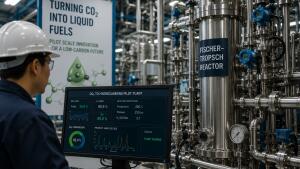
A research team in South Korea has demonstrated continuous conversion of captured carbon dioxide into liquid hydrocarbons – including gasoline and naphtha – at a pilot-scale output of 50 kilograms per day.The process draws on Fischer–Tropsch synthesis, a catalytic chemistry that h...
OGMP updates signal a new phase for methane monitoring 
The Oil & Gas Methane Partnership 2.0 is moving from voluntary climate disclosure towards something much closer to market infrastructure.For environmental and process monitoring professionals, the significance is not simply that more oil and gas companies are reporting methane emissions...
Get the right exposure! With an e-bulletin you can! Place your products in this eBulletin and target the right people straight to their inbox. Contact to find out more…
|