Chromatography
Analytical science is undergoing a quiet but profound transformation. Across environmental monitoring, life sciences, food safety and industrial quality control, the demand for faster, more reliable and more accessible data is intensifying. Laboratories are no longer judged solely by accuracy, but by their ability to deliver reproducible results at scale, integrate workflows, and respond dynamically to new analytical challenges. At the heart of this evolution lies a convergence of automation, sensitivity, and intelligent system design - trends clearly reflected in a new generation of separation-based analytical technologies.
Recent developments in gas chromatography, ion chromatography, and microchip electrophoresis illustrate how established techniques are being reimagined. While each method is rooted in decades of scientific practice, their latest implementations point toward a future in which analytical systems behave less like instruments and more like collaborative partners—guiding users, optimising processes, and expanding the boundaries of what can be measured.
Separation techniques remain foundational to modern analytical workflows. Whether identifying trace organic compounds in environmental samples, quantifying ionic species in drinking water, or assessing nucleic acid integrity in genomics, the ability to isolate and characterise components within complex mixtures is essential.
Gas chromatography (GC), ion chromatography (IC), and electrophoresis each address distinct analytical domains:
• Gas chromatography excels in the separation of volatile and semi-volatile compounds, making it indispensable in petrochemical analysis, food safety testing, and atmospheric monitoring.
• Ion chromatography targets charged species, particularly inorganic ions in aqueous matrices, and is central to regulatory water analysis and environmental chemistry.
• Electrophoresis, especially in its microchip-based form, plays a critical role in life sciences by separating biomolecules such as DNA and RNA based on size and charge.
What unites these techniques is not only their reliance on separation principles but also the increasing expectation that they operate seamlessly, efficiently, and with minimal user intervention.
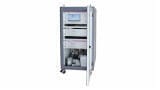
Gas chromatography has long been a cornerstone of analytical chemistry, and its relevance continues to grow in response to global challenges such as energy transition and environmental sustainability. The need to analyse trace gases in emerging energy systems, monitor pollutants, and ensure product quality has driven demand for instruments that combine high sensitivity with operational flexibility.
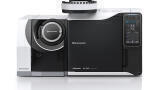
Recent advancements demonstrate how GC systems are evolving beyond traditional performance metrics. Enhanced detector sensitivity allows for the reliable detection of compounds at extremely low concentrations, enabling high-speed trace analysis across a wide range of applications. For example, improvements in flame ionisation and thermal conductivity detection have significantly lowered detection limits while maintaining stability, even during frequent start-up and shutdown cycles.
Equally important is the shift toward workflow optimisation. Modern GC systems incorporate features such as multi-mode injection ports capable of handling diverse sample types - from large-volume injections for pesticide analysis to split injections for biofuel evaluation. This versatility reduces the need for multiple instruments and simplifies laboratory operations. The ability to automate temperature control, gas flow, and maintenance routines further minimises user error and enhances reproducibility.
In environmental and energy-related applications, these improvements translate into tangible benefits. Laboratories analysing emissions from renewable fuels, for instance, can perform rapid, high-throughput measurements without compromising sensitivity. Similarly, food safety laboratories can detect trace contaminants more efficiently, supporting regulatory compliance and consumer protection.
Another notable trend is the integration of sustainability considerations into instrument design. Features such as optimised energy consumption and alternatives to traditional gas cylinders - such as hydrogen and oxygen generation from water - reduce both operational costs and environmental impact. This aligns analytical practice with broader goals of carbon neutrality and resource efficiency, reflecting the growing influence of green chemistry principles.
If gas chromatography addresses complexity in volatile compounds, ion chromatography tackles the equally demanding task of quantifying ionic species in aqueous environments. This is particularly critical in water quality analysis, where regulatory frameworks require precise and consistent measurement of cations and anions.
Traditionally, IC workflows have been labour-intensive, involving multiple manual steps in sample preparation, calibration, and data interpretation. However, recent innovations are transforming IC into a highly automated and user-friendly technique.
One of the most significant developments is the introduction of automated sample handling, including the dilution of high-concentration samples during analysis. This eliminates the need for repeated manual preparation and reduces downtime, ensuring that laboratories can maintain continuous operation even when dealing with variable sample matrices.
In parallel, advances in software integration are redefining how data is processed and interpreted. Modern systems provide real-time identification of abnormal or outlier values, enabling faster decision-making and reducing the risk of reporting errors. Preloaded analytical methods aligned with regulatory standards further streamline routine workflows, particularly in public testing institutions and contract laboratories where compliance is paramount.
From a practical standpoint, these capabilities are especially valuable in environmental monitoring. Water utilities, for example, must routinely test for contaminants such as nitrate, sulphate, and chloride ions. Automated IC systems allow even less-experienced operators to perform these analyses with confidence, supported by guided workflows and troubleshooting tools embedded within the software.
Another key innovation is the concept of ‘analytical intelligence’, where hardware and software work in concert to monitor system status, adjust operating conditions, and provide feedback to users. This reduces reliance on expert knowledge and shortens training time, making advanced analytical techniques more accessible across a wider range of laboratories.
The impact extends beyond efficiency. By minimising human intervention and standardising procedures, automated IC systems enhance data reliability - an essential requirement in regulatory contexts where analytical results inform public health decisions.
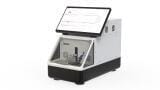
While chromatography dominates chemical analysis, electrophoresis remains central to the life sciences, particularly in genomics and molecular biology. The transition from traditional gel electrophoresis to microchip-based systems represents a major leap forward in both speed and efficiency.
Conventional electrophoresis is notoriously time-consuming, involving multiple manual steps such as gel preparation, sample loading, staining, and cleaning. These processes can take several hours and are prone to variability. Microchip electrophoresis, by contrast, integrates all these steps into a compact, automated platform.
Recent systems have reduced analysis start-up times to minutes, with fully automated workflows that handle sample addition, separation, and detection. This not only accelerates throughput but also ensures consistent results across large sample sets.
In the context of modern genomics, such improvements are transformative. Techniques like next-generation sequencing (NGS) require rigorous quality control of DNA and RNA samples. Microchip electrophoresis systems provide high-sensitivity detection and quantitative metrics such as RNA integrity indices, enabling researchers to assess sample quality with precision before proceeding to sequencing.
The addition of advanced analytical functions - such as automated DNA fingerprinting and grouping analysis - further enhances the utility of these systems. Researchers can quickly determine the presence or absence of target sequences, classify samples based on genetic profiles, and identify patterns that would be difficult to discern manually.
Applications extend beyond basic research. In food safety, microchip electrophoresis can detect allergens or pathogens by analysing genetic material. In clinical and pharmaceutical settings, it supports the development of gene therapies and personalised medicine by enabling rapid and reliable genetic analysis.
Importantly, these systems also address environmental and operational concerns. Reduced power and water consumption, along with smaller instrument footprints, make them suitable for a wide range of laboratory environments, from large research institutions to smaller testing facilities.
Despite their differences, gas chromatography, ion chromatography, and electrophoresis share common scientific foundations. Each technique relies on the differential movement of analytes under specific conditions:
• In gas chromatography, compounds are separated based on their volatility and interaction with a stationary phase as they are carried by an inert gas through a column.
• In ion chromatography, separation is achieved through ion exchange interactions between analytes and a charged stationary phase, followed by detection of ionic species in solution.
• In electrophoresis, charged molecules migrate through a medium under an electric field, with separation determined by size-to-charge ratio.
What distinguishes modern implementations is the integration of these principles with automation, miniaturisation, and digital control. Advances in materials science, microfluidics, and sensor technology have enabled more precise control over separation conditions, while software innovations allow systems to adapt dynamically to changing analytical requirements.
For example, automated flow control and temperature regulation in chromatography systems ensure optimal separation conditions without manual adjustment. In microchip electrophoresis, microfluidic channels enable rapid and efficient separation within a compact device, reducing both analysis time and reagent consumption.
These innovations reflect a broader shift toward systems thinking in analytical science. Instruments are no longer isolated tools but components of integrated workflows, designed to communicate with other systems, manage data intelligently, and support decision-making processes.
The practical implications of these advancements are far-reaching, affecting multiple sectors:
• Environmental analysis: High-sensitivity GC and automated IC systems enable precise monitoring of air and water quality, supporting regulatory compliance and environmental protection efforts.
• Energy and sustainability: GC systems play a critical role in analysing alternative fuels and emissions, contributing to the development of cleaner energy technologies.
• Food safety: Both GC and electrophoresis techniques are used to detect contaminants, additives, and allergens, ensuring product safety and quality.
• Life sciences and healthcare: Microchip electrophoresis accelerates genomic research, enabling faster diagnostics and the development of personalised treatments.
• Industrial quality control: Automated analytical systems improve consistency and efficiency in manufacturing processes, reducing waste and ensuring product reliability.
Across these applications, a common theme emerges: the need for speed, accuracy, and accessibility. Laboratories must handle increasing sample volumes, meet stringent regulatory requirements, and adapt to rapidly evolving scientific challenges.
Compared to earlier generations of analytical techniques, the latest systems offer several key advantages:
1. Automation and efficiency
By reducing manual intervention, automated workflows minimise human error and increase throughput. Tasks that once required hours of preparation can now be completed in minutes.
2. Enhanced sensitivity and precision
Improved detection technologies allow for the analysis of trace-level compounds and subtle molecular differences, expanding the scope of measurable phenomena.
3. User-friendly operation
Intuitive interfaces and guided workflows make advanced techniques accessible to non-expert users, reducing training requirements and democratising analytical capabilities.
4. Integrated data analysis
Real-time data processing and intelligent feedback systems enable faster interpretation of results and more informed decision-making.
5. Sustainability
Reduced energy and resource consumption align analytical practices with environmental goals, supporting sustainable laboratory operations.
6. Flexibility and scalability
Modular designs and multi-mode capabilities allow a single system to address diverse analytical needs, reducing capital investment and maximising utility.
These advantages collectively redefine what laboratories can achieve, enabling them to operate more efficiently while maintaining the highest standards of accuracy and reliability.
The evolution of analytical instruments reflects a broader trend toward the intelligent laboratory—an environment where automation, connectivity, and data-driven insights converge. In such a setting, instruments not only perform measurements but also guide users, optimise workflows, and contribute to a continuous cycle of improvement.
The innovations highlighted here demonstrate how this vision is becoming a reality. By combining advanced separation techniques with intelligent design, modern analytical systems are transforming the way laboratories operate.
Looking ahead, further integration with digital technologies—such as artificial intelligence and cloud-based data management—will likely enhance these capabilities even further. Instruments may soon be able to predict maintenance needs, optimise analytical conditions in real time, and share data seamlessly across global networks.
The latest developments in gas chromatography, ion chromatography, and microchip electrophoresis illustrate the ongoing transformation of analytical science. Rooted in established principles yet driven by innovation, these technologies are redefining what is possible in laboratory analysis.
By enhancing sensitivity, automating workflows, and integrating intelligent features, modern analytical systems address the growing demands of diverse applications—from environmental monitoring to genomic research. At the same time, they make advanced techniques more accessible, enabling a broader range of users to generate high-quality data.
In an era where data is both abundant and essential, the ability to extract meaningful insights efficiently and reliably is more important than ever. The continued evolution of separation-based analytical technologies will play a central role in meeting this challenge, shaping the future of science and industry alike.
PIN 27.2 Apr/May 2026


 Product directory